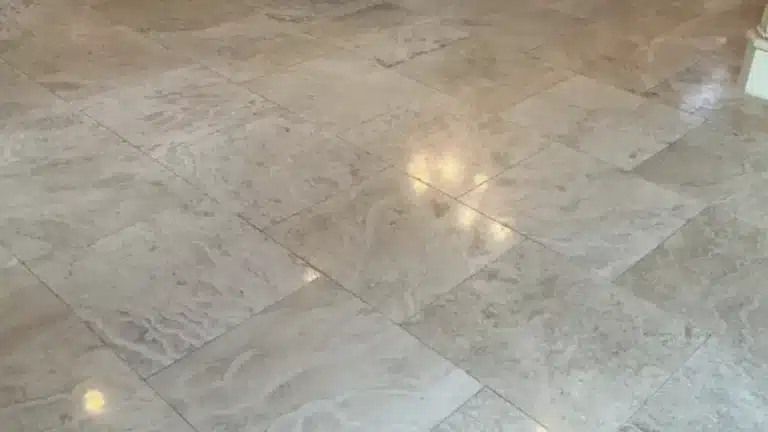
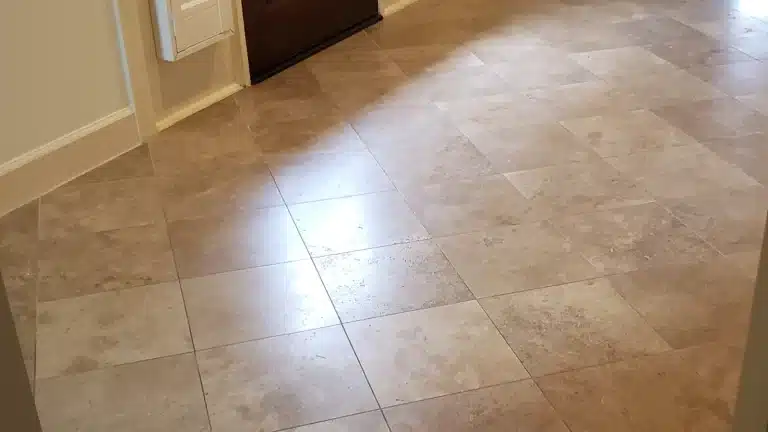
Travertine Shower Floor Bleach Damage
Travertine shower floor bleach damage can happen from a simple mistake—but the impact can permanently alter natural stone if not handled correctly. In this case, a homeowner applied bleach to a travertine shower floor and left it sitting overnight—resulting in widespread etching, white staining, and visible damage throughout the tile and grout.
If you’re dealing with something similar, the good news is this: the damage is very fixable—but not in the way most DIY guides suggest. Understanding what actually happened to the stone is the first step to restoring it correctly.
A Real-World Scenario: Bleach Damage in a Travertine Shower
A homeowner reached out after applying bleach to a rough, pitted travertine shower floor and leaving it on the surface for several hours. Realizing the mistake, the floor was rinsed and a mild soap solution was used in an attempt to neutralize the damage.
By morning, the changes were obvious. The surface showed widespread white spotting, dullness, and breakdown within the natural pits of the stone. The grout joints also appeared lighter and uneven, raising concern about deeper damage.
The total area was small—about 18 square feet—but the impact was significant. Like many homeowners, the question wasn’t just what happened, but whether this could be repaired without making things worse.
What Bleach Actually Does to Travertine
Travertine is a calcium-based natural stone, which means it reacts chemically to harsh cleaners—especially anything acidic or highly alkaline like bleach.
When bleach sits on the surface, it doesn’t just “clean”—it breaks down the top layer of the stone. This process is called etching, and it permanently alters the finish. Instead of a consistent surface, you’re left with dull, chalky areas that appear lighter or white.
In this case, the damage is more visible because of the stone’s natural texture. Travertine has open pores and pits, and those areas absorb and hold chemicals longer than the surface. That’s why the etching appears more aggressive and uneven across the floor.
The grout is also affected. Bleach can weaken or discolor grout joints, making them appear blotchy or overly bright compared to the surrounding stone. What looks like “staining” is actually surface damage—and that distinction is critical, because it determines how the problem must be corrected.
If you’re unsure what products are safe for natural stone, check out our travertine care guide to avoid causing further damage.
Why Most DIY Fixes Make This Worse
The natural reaction is to try to “clean” or “remove” the white areas—but this isn’t a surface contaminant that can be washed away. The damage is already part of the stone. Many DIY approaches rely on stronger cleaners, scrubbing pads, or household products, which only deepen the problem. Abrasive tools can scratch the surface, and additional chemicals can continue reacting with the stone, creating even more inconsistency.
Even well-intentioned solutions—like using soap or neutral cleaners—won’t reverse etching. At best, they stop further damage. They do not restore the original finish.
The challenge is that travertine doesn’t just need to be cleaned—it needs to be mechanically refinished to remove the damaged layer and bring the surface back to a uniform appearance.
If you’re dealing with this issue, professional travertine restoration may be required to fully correct the damage without making it worse. Learn more about our travertine restoration services.
Can Bleach-Damaged Travertine Be Repaired?
Yes—this type of damage can be repaired, even when the etching appears severe. However, the solution isn’t chemical—it’s corrective.
Restoring travertine after bleach damage requires removing the affected surface layer and refining the stone back to a consistent finish. This is typically done using professional-grade abrasives designed specifically for natural stone.
In smaller areas, like this shower floor, repair is often very achievable—but it requires precision. The goal isn’t just to improve the appearance of one spot, but to blend the entire surface so the repair is invisible.
The grout may also need attention, depending on how deeply it was affected. In some cases, it can be cleaned and evened out. In others, minor grout repair may be required to fully restore a uniform look. The key is understanding that this is a surface correction process, not a cleaning process.
What This Type of Damage Actually Requires
Repairing bleach-damaged travertine isn’t about applying a product—it’s about correcting the surface itself. The visible white areas and dull patches are the result of physical damage to the stone, which means the only way to fix it is to remove that damaged layer and re-establish a consistent finish.
This is typically done through a controlled honing and refinement process using professional abrasives. In some cases, that may involve honing powders or diamond pads designed specifically for calcium-based stone. The goal is not just to smooth the surface, but to restore a uniform appearance across the entire floor.
The challenge—especially in a shower like this—is control. Travertine has natural pits, variation, and softer areas that react differently during refinement. Without the right approach, it’s easy to create an uneven finish or overcorrect certain sections while leaving others visibly etched.
That’s why most successful repairs focus on blending the entire surface, not just spot-treating the damage. When done correctly, the floor doesn’t look “fixed”—it looks consistent, natural, and intentional again.
Visual Examples
This real-world example shows the effects of bleach exposure on a travertine shower floor. What appears to be white staining is actually surface etching—where the stone has been chemically altered and the finish permanently damaged.

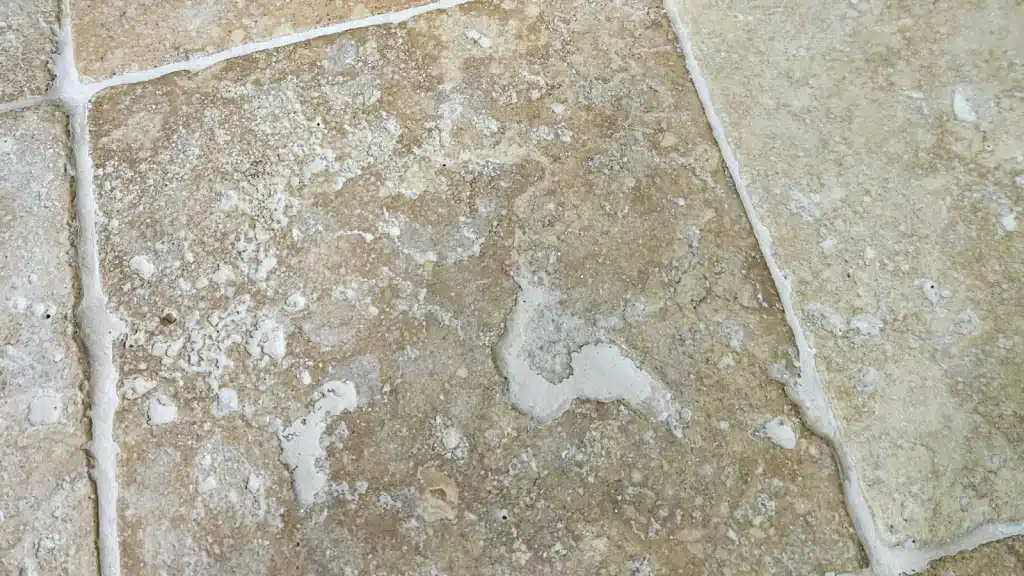
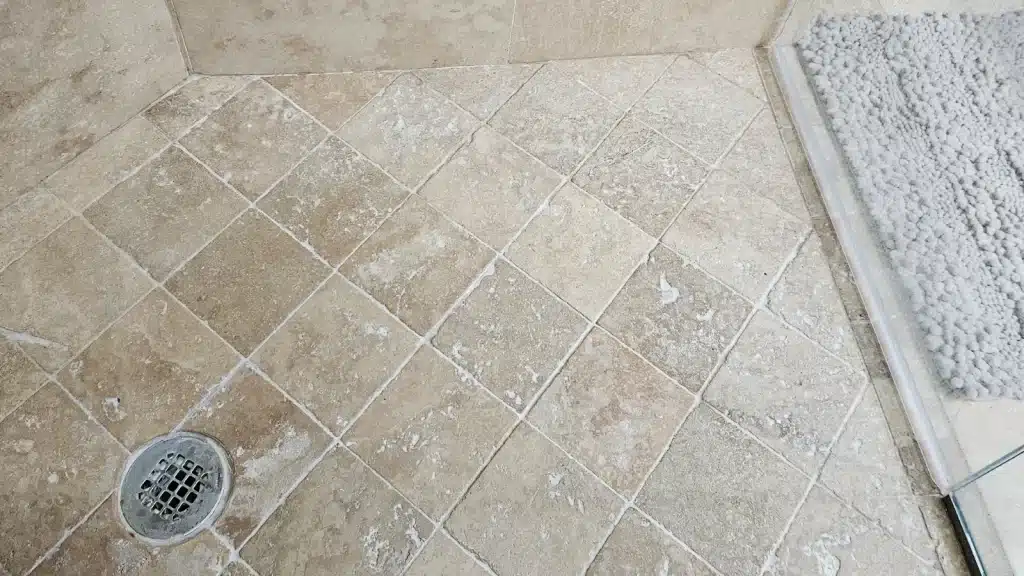
Unlike surface buildup, this type of damage cannot be cleaned away. The uneven appearance, dullness, and white spotting require surface correction to restore a consistent, natural look.
Do’s and Don’ts of Travertine Floor Care
Do:
- Use pH-neutral cleaners specifically designed for natural stone
- Rinse shower floors regularly to reduce mineral buildup
- Dry or squeegee areas where water tends to sit
- Use stone-safe products when addressing mold or mildew
- Follow surface-specific care guidelines for ongoing maintenance
Don’t:
- Use bleach, vinegar, or acidic/alkaline cleaners on travertine
- Assume discoloration is always “dirt” that needs stronger cleaning
- Let cleaning products sit on the surface for extended periods
- Scrub aggressively with abrasive pads or brushes
- Experiment with multiple products trying to “fix” the issue
For deeper guidance on protecting travertine in wet areas, refer to our Care Guides and Surface IQ resources, where we break down how different stone surfaces react to real-world conditions.
When It Makes Sense to Bring in a Professional
In situations like this, the biggest risk isn’t the original damage—it’s making it worse while trying to fix it. Once travertine has been etched, correcting it requires a controlled approach that most homeowners simply don’t have the tools or experience to execute consistently.
Small areas can seem manageable, but blending a natural stone surface—especially one with variation like travertine—is where things become difficult. What starts as a repair can quickly turn into a larger refinishing project if the results aren’t even.
If the surface looks patchy, feels rough, or continues to appear inconsistent after cleaning attempts, it’s usually a sign that professional restoration is the better path.
For homeowners who want the issue corrected properly the first time, professional travertine restoration focuses on restoring uniformity, protecting the surface, and preventing the same type of damage from happening again.
Frequently Asked Questions About Travertine Bleach Damage
Can bleach permanently damage travertine?
Yes. Bleach can chemically etch the surface of travertine, causing permanent dullness, white spots, and surface breakdown if not properly restored.
Why does travertine turn white after bleach?
The white appearance is caused by etching, where bleach breaks down the top layer of the stone and removes its natural finish, leaving a dull and chalky surface.
Can etched travertine be repaired?
Yes. Etched travertine can usually be repaired through honing and polishing to remove the damaged layer and restore a consistent finish.
Is bleach safe for cleaning travertine showers?
No. Bleach is too harsh for natural stone and can cause permanent damage. It’s best to use pH-neutral cleaners specifically designed for travertine.
When should I hire a professional for travertine damage?
If the surface appears patchy, rough, or uneven after cleaning attempts, professional restoration is usually the best option to achieve consistent and long-lasting results.
See Real Travertine Floor Restoration Examples
If you’d like to see how professional travertine floor repairs and restoration addresses these issues in real homes, explore our completed case studies showcasing before-and-after results achieved through proven restoration methods.