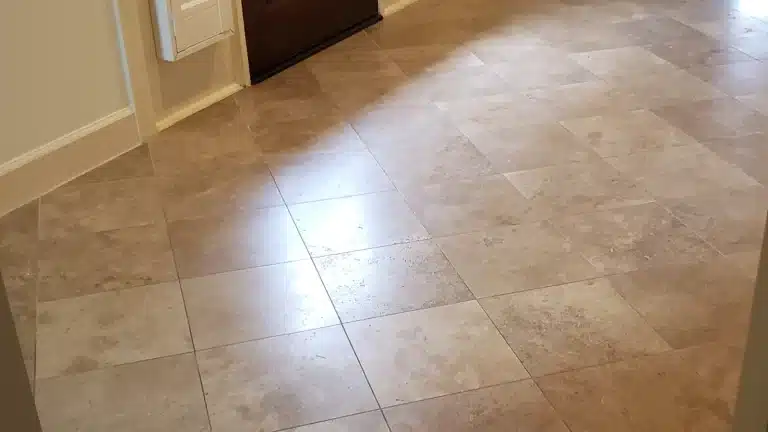
Understanding Travertine Restoration Pricing: What It Costs and Why
When homeowners contact a natural stone restoration specialist, one of the most common misunderstandings involves the difference between having a travertine floor cleaned and having it professionally restored.
A homeowner may ask for a “deep cleaning” when what they really want is the smooth, reflective finish their travertine had when it was new. But cleaning and restoration are two very different services—and understanding that difference is one of the most important factors in understanding travertine restoration pricing.
Surface cleaning removes dirt. Mechanical restoration changes and refines the stone itself.
The amount of work required to achieve the desired finish—along with scratches, etching, coatings, lippage, holes, cracks and other existing conditions—is what ultimately determines the cost of restoring a travertine floor.
Cleaning vs. Polishing: Why the Difference Matters
Standard surface cleaning removes embedded dirt, oils, residue and soil from the stone and grout. Professional equipment such as rotary scrubbers and extraction systems can produce a dramatically cleaner floor, but cleaning alone cannot change the physical finish of the travertine.
If the floor has become dull from traffic wear, contains scratches or etching, has uneven areas, or the homeowner wants to restore a reflective polished finish, the stone must be mechanically refinished.
Mechanical restoration uses professional diamond abrasives in progressively finer stages to refine the surface of the stone itself. Depending on the condition of the floor, this may involve honing, polishing or more aggressive grinding before the final finish can be produced.
This distinction is important because two travertine floors of exactly the same square footage can require completely different amounts of labor, tooling and restoration steps.
Why Travertine Restoration Pricing Varies
The cost of restoring travertine is primarily determined by the condition of the stone and the number of mechanical steps required to achieve the desired finish.
Restoring natural stone is mechanically similar to polishing a gemstone or sanding wood. The surface is refined through a progression of increasingly finer diamond abrasives. Each additional stage requires another complete pass across the floor, adding labor, tooling and machine time to the project.
Professional stone restoration generally uses two types of diamond tooling:
Metal-Bond Diamonds: Rigid, sintered metal-matrix diamonds designed for aggressive material removal. These are used when a floor has deep scratches, severe wear, uneven tile edges or lippage that cannot be corrected with lighter abrasives.
Resin-Bond Diamonds: Finer, more flexible diamond abrasives used to progressively hone and refine the stone. Depending on the desired finish, the progression may continue through increasingly finer grits to produce anything from a smooth honed appearance to a highly reflective polished finish.
This is why two travertine floors with the same square footage may have very different restoration costs. A floor requiring only light honing may need a few refinement stages, while a severely damaged floor may require aggressive grinding followed by a complete multi-step diamond progression.
At NextGen Surface Care, our goal is to use the least aggressive effective process capable of achieving the desired result. We avoid unnecessary grinding whenever possible, helping preserve the stone while also keeping the restoration scope appropriate for its actual condition.
What Does Travertine Restoration Cost?
Travertine restoration pricing typically ranges from approximately $2.00 to $8.00 per square foot, depending on the condition of the stone, the desired finish, and the number of restoration steps required.
For many residential floors with routine traffic wear and no severe structural damage, restoration may average around $4.00 per square foot. However, a floor requiring deeper grinding, coating removal, extensive repairs, or multiple diamond stages can move into a higher pricing range.
The biggest factor affecting square-foot pricing is the diamond progression required to restore the floor. Each additional grit or restoration stage requires another pass across the surface, increasing labor, tooling, machine time, and overall project cost.
This is why square footage alone does not determine the final price. Two 1,000-square-foot travertine floors can require completely different restoration processes depending on their existing condition.
For additional information about how we restore worn, scratched, etched, or dull natural stone, learn more about our travertine restoration services.
Travertine Restoration Pricing by Service Level
Not every travertine floor requires the same level of restoration. Pricing increases as the process moves from basic cleaning and sealing into multi-step diamond honing, polishing and heavy mechanical restoration.
Basic Deep Clean & Seal — Approximately $2.00 per sq. ft.
Professional cleaning using stone-safe products and extraction to remove embedded dirt from the stone and grout, followed by an impregnating penetrating sealer when appropriate. This improves cleanliness and protection but does not change the existing finish or remove scratches and etching.
Standard Diamond Honing — Approximately $2.00–$4.00 per sq. ft.
A multi-stage honing process typically beginning with approximately 200- to 400-grit resin-bond diamonds to address light wear, scuffs and etching. This can produce a smooth honed, satin or lower-sheen finish.
Multi-Step Honing & Polishing — Approximately $4.00–$7.00+ per sq. ft.
More extensive restoration may begin with lower diamond grits and progress through multiple stages such as 200, 400, 800 and 1,500 grit before final polishing. This process is designed for moderate-to-deeper wear and for homeowners seeking greater clarity and reflection.
Full Mechanical Restoration — Up to approximately $8.00 per sq. ft.
Severely worn, scratched or uneven floors may require aggressive initial grinding with metal-bond diamonds followed by a complete multi-stage refinement and polishing sequence. This represents the most extensive level of restoration within these baseline pricing ranges.
What Can Increase the Cost of Travertine Restoration?
The square-foot pricing ranges above represent typical restoration conditions. Certain existing floor conditions can increase the scope of work because they require additional labor, specialized chemicals, heavier diamond tooling, or additional preparation before the normal restoration process can even begin.
Wax & Topical Coating Removal — Approximately +$2.50 per sq. ft.
Acrylic waxes, synthetic shine products and other topical coatings are sometimes applied to travertine in an attempt to improve its appearance. Over time, these coatings can yellow, peel and trap dirt within the stone’s natural pits and grout lines.
These coatings must typically be removed before proper mechanical restoration can begin. During diamond grinding, friction can soften or smear some coatings across the surface and interfere with diamond tooling. Chemical stripping or specialized coating-removal methods may therefore be required first, adding approximately $2.50 per square foot depending on the coating and its condition.
Heavy Grinding & Metal-Bond Diamonds
Deep scratches, severe wear and uneven tile edges cannot always be corrected with standard resin-bond diamonds. These conditions may require rigid metal-bond diamond tooling capable of removing more material from the stone.
Heavy grinding significantly increases machine time, tooling wear and the number of refinement stages required afterward. Major lippage removal or extensive floor flattening may also fall outside standard restoration pricing and require a separate assessment.
Extensive Surface Correction
Some floors contain years of embedded contamination, oxidation, previous restoration residue or severe surface deterioration. Correcting these conditions may require additional grinding and refinement stages before the desired appearance can be achieved.
Site Protection & Sensitive Baseboards
Wet stone restoration creates slurry consisting of water and finely ground stone. Finished cabinetry, walls, adjacent flooring and particularly MDF baseboards require careful protection because MDF can absorb moisture and swell if exposed to water. Projects requiring extensive masking, containment or protection may involve additional preparation and labor.
These conditions are why an accurate travertine restoration estimate requires more than square footage alone. The existing finish, previous coatings, depth of damage, required repairs and desired final appearance all help determine the appropriate restoration process.
Real Travertine Conditions That Affect Restoration Pricing
No two travertine floors require exactly the same restoration process. Surface wear, scratches, etching, coatings, lippage, holes and the desired final finish can all affect the number of steps required—and ultimately the project cost.
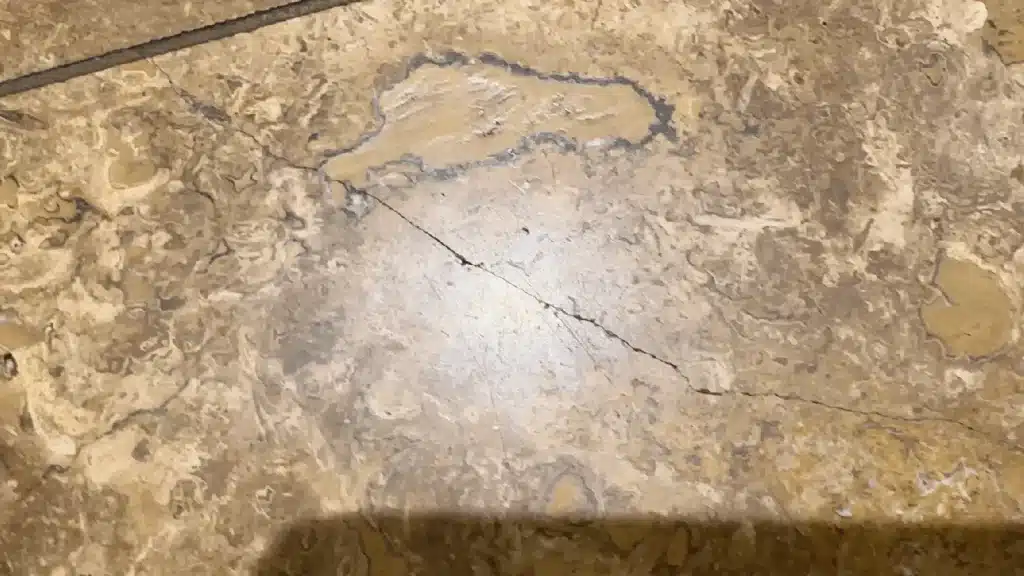


These examples illustrate why travertine restoration is evaluated by both square footage and condition. A lightly worn floor may require only a few refinement stages, while deeper damage or extensive correction can require additional grinding, repairs and polishing steps.
What’s Typically Included — and What May Cost More
Typical Restoration Pricing May Include:
- Professional stone-safe cleaning and preparation
- Diamond honing based on the required starting grit
- Progressive surface refinement
- Polishing to the selected finish
- Slurry recovery and jobsite cleanup
- Standard protection of surrounding surfaces
- Penetrating sealer when included in the restoration scope
Additional Costs May Include:
- Removal of waxes or topical coatings
- Deep scratch removal
- Heavy metal-bond diamond grinding
- Major lippage removal or floor flattening
- Crack repairs
- Holes, pits and failed factory-fill repairs
- Extensive masking or sensitive-area protection
Every travertine floor is different. Final pricing should be based on the existing condition of the stone, desired finish, required repairs and restoration process, rather than square footage alone.
For deeper guidance on protecting travertine in wet areas, refer to our Care Guides and Surface IQ resources, where we break down how different stone surfaces react to real-world conditions.
Holes, Pits & Cracks: How Travertine Repairs Are Priced
Travertine naturally contains voids created during the stone’s formation. Many tiles are factory-filled before installation, but over time those original fills can loosen, crack or pop out, leaving open holes and pits in the floor.
These repairs are generally priced separately from the standard square-foot restoration rate because the amount of repair work can vary dramatically from one floor to another.
Holes, Pits & Failed Factory Fills
Localized holes and voids may be priced as a bundled repair package, while floors with widespread pitting may require an hourly or project-based repair rate. Loose material is removed and the void is prepared before being filled with a professional repair resin. When appropriate, pigments can be blended into the repair material to better coordinate with the surrounding travertine before the repair is finished flush with the surface.Crack Repairs
Cracks may result from subfloor movement, foundation settlement, floor deflection or impact. Depending on the condition, the damaged area may need to be opened and prepared before repair material is installed and color-matched to the surrounding stone. Crack repairs may be priced by the linear foot, hourly, or as a separate project charge depending on their extent and complexity.The goal is to make repairs visually compatible with the surrounding natural stone while improving the integrity of the damaged area. Because every hole, crack and floor condition is different, these repairs are evaluated individually rather than automatically included in a general restoration price.
For homeowners who want the issue corrected properly the first time, professional travertine restoration focuses on restoring uniformity, protecting the surface, and preventing the same type of damage from happening again.
Frequently Asked Questions About Travertine Restoration Pricing
How much does travertine restoration cost per square foot?
Travertine restoration typically ranges from approximately $2.00 to $8.00 per square foot, depending on the condition of the stone, desired finish, required diamond progression, and overall scope of work. Floors requiring coating removal, heavy grinding, repairs, or other corrective work may cost more.
How much does it cost to clean and seal travertine?
Basic professional travertine cleaning and sealing may start around $2.00 per square foot under typical conditions. Pricing can vary based on the condition of the floor, grout, existing coatings, accessibility, and the amount of preparation required.
Why does polishing travertine cost more than cleaning it?
Cleaning removes dirt and contamination from the surface, while polishing requires mechanically refining the stone with diamond abrasives. Multiple passes may be necessary to remove wear, etching and scratches before the desired finish can be restored, increasing labor, tooling and machine time.
Are holes, cracks and lippage included in travertine restoration pricing?
Not necessarily. Holes, failed factory fills, cracks, deep scratches and significant lippage may require additional repair or grinding beyond the standard restoration process. These conditions are typically evaluated separately based on their extent and complexity.
Can you give an exact travertine restoration price based only on square footage?
Square footage provides a useful starting point, but an accurate estimate also depends on the condition of the stone, existing finish, previous coatings, depth of damage, required repairs and desired final appearance. Two floors of the same size can require very different restoration processes.
See Real Travertine Floor Restoration Examples
If you’d like to see how professional travertine floor repairs and restoration addresses these issues in real homes, explore our completed case studies showcasing before-and-after results achieved through proven restoration methods.