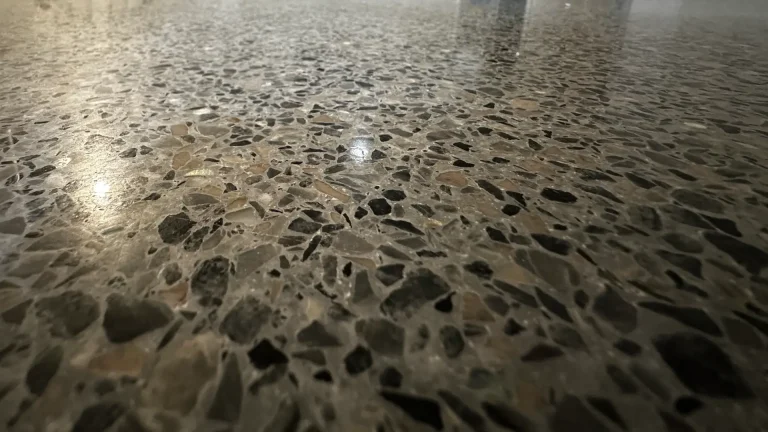
Understanding Terrazzo Coatings and Why They Fail
Terrazzo coatings problems are more common than most homeowners realize. Terrazzo floors are designed to last for decades, but coatings can introduce scratching, cloudiness, and long-term maintenance issues. Terrazzo floors are designed to last for decades when properly finished and maintained. However, many terrazzo floors are covered with topical coatings such as acrylic finishes or sealers to create shine or reduce upfront restoration costs.
While these coatings may improve appearance initially, they often introduce a completely different set of problems over time—especially in residential environments where long-term durability and consistency matter.
Understanding how these coatings behave is critical, because most issues homeowners see are not problems with the terrazzo itself—but with what’s been applied on top of it.
Understanding Coated Terrazzo Floors
In some properties, terrazzo is not polished to its natural finish. Instead, a coating is applied over the surface to create a glossy appearance. This coating acts as a thin film layer that sits on top of the terrazzo rather than becoming part of it.
From our experience working on coated terrazzo floors, this layer tends to:
- Wear unevenly with traffic
- Scratch easily compared to the terrazzo beneath it
- Trap dirt and residue over time
Unlike natural polished terrazzo, the appearance of the floor becomes fully dependent on the condition of that coating layer.
Common Terrazzo Coatings Problems We See
These are the most common issues we encounter in the field:
- Fine scratches visible in direct lighting
- A cloudy or hazy appearance that doesn’t clean off
- Uneven gloss across different areas of the floor
- Yellowing or discoloration over time in most cases
- Multiple layers of coating buildup from past maintenance
- In many cases, the terrazzo underneath is still structurally sound—but the coating is what’s failing visually.
Why Coatings Scratch So Easily
One of the biggest misconceptions is that the terrazzo itself is scratching. In reality, what you’re seeing is damage to the coating layer.
This happens because:
- The coating is significantly softer than terrazzo
- Dirt and debris act as abrasives under foot traffic
- Daily use gradually wears down the surface
As scratches build up, they scatter light across the surface, which is what creates that dull or cloudy look.
Can Scratched Coatings Be Repaired?
This is where most people run into frustration. Coated terrazzo floors cannot be reliably spot repaired.
Because coatings are applied as a continuous layer, any attempt to repair a small section will almost always result in:
- Visible differences in gloss
- Uneven blending
- Areas that stand out more than the original damage
We’ve seen this many times—what starts as a small repair often ends up looking patchy or inconsistent under normal lighting.
The reality is simple: 👉 It’s either the entire surface… or nothing. As explained in our terrazzo restoration FAQs, coated floors cannot be spot repaired without creating uneven results.
Our Position on Coated Terrazzo Floors
At NextGen Surface Care, we do not perform spot repairs on coated terrazzo surfaces. The reason is straightforward:
We cannot guarantee a consistent result, and we don’t take on work that creates unnecessary liability for the client or for us.
In rare cases, we may service a small area under very specific conditions:
- The client understands the coating will not be reapplied
- The area will be refinished through mechanical polishing only
- A written acknowledgment is provided prior to service
Even then, the result is not a blended repair—it is a transition between a polished section and a coated section.
Many terrazzo floors are covered with topical coatings… If you’re looking for a long-term solution, professional terrazzo restoration removes coatings and restores the natural surface.
Examples of Proper Terrazzo Floor Cleaning
Cleaning terrazzo floors properly helps maintain their polished appearance and prevent residue buildup. The examples below show common cleaning practices used to keep terrazzo surfaces clean and well maintained.


Images shown here are from real restoration projects performed by NextGen Surface Care and are included for educational purposes to demonstrate professional stone restoration techniques.
Why Coated Floors Continue to Decline Over Time
Coating systems require ongoing maintenance cycles.
Over time:
- Layers build up
- Dirt becomes trapped between applications
- The surface loses clarity and consistency
What starts as a “quick solution” often turns into repeated maintenance just to maintain appearance.
Coated vs. Naturally Polished Terrazzo
There are two fundamentally different approaches to terrazzo:
Coated Terrazzo
- Shine comes from a surface layer
- Prone to scratching and wear
- Requires ongoing maintenance and reapplication
Naturally Polished Terrazzo
- Shine comes from the material itself
- More consistent and durable
- No reliance on topical coatings
Most of our restoration work involves removing coatings entirely and restoring the terrazzo to its natural finish.
When It’s Time to Address the Problem
You may be dealing with a failing coating if you notice:
- Scratches that won’t clean off
- Cloudy or dull appearance
- Uneven reflection across the floor
- Yellowing or buildup over time
At this stage, the solution is not cleaning—it’s correction.
Our Recommendation
If a terrazzo floor is coated and showing visible wear, the proper options are:
- Full removal of the coating and reapplication
or - Complete restoration through honing and polishing
Partial fixes are not a long-term solution and often lead to inconsistent results.
Explore Terrazzo Floor Restoration Case Studies
If you’d like to see how professional terrazzo floor restoration improves the appearance of worn or dull terrazzo surfaces, explore our completed case studies. These projects demonstrate how proper cleaning and polishing techniques restore terrazzo floors in real environments.