Terrazzo Floor Cleaning Methods
Terrazzo floors are known for their durability, distinctive appearance, and long lifespan. Made from marble chips, quartz, or glass embedded in a cement or resin base, terrazzo creates a smooth and resilient flooring surface commonly used in homes, commercial spaces, and public buildings.
Although terrazzo is durable, proper cleaning methods are important to maintain its appearance and prevent surface dullness or residue buildup. Using the correct cleaning techniques helps preserve the finish and keeps terrazzo floors looking polished and well maintained.
Understanding Terrazzo Floor Surfaces
Terrazzo flooring is created by combining marble chips, quartz, granite, or glass with a cement or epoxy binder. After curing, the surface is ground and polished to create a smooth, durable finish. This process results in a dense and long-lasting floor that is resistant to wear when properly maintained.
Although terrazzo is highly durable, improper cleaning products or residue buildup can dull the surface over time. Understanding how terrazzo is constructed helps homeowners choose cleaning methods that protect the finish and maintain its polished appearance.
Common Cleaning Issues with Terrazzo Floors
- Dull or cloudy appearance caused by residue from improper cleaners
- Streaking left behind by soap or detergent buildup
- Loss of shine due to abrasive cleaning tools or pads
- Embedded dirt accumulating in textured or worn terrazzo surfaces
- Surface haze caused by incorrect floor cleaning products
- Yellowing from wax coatings or topical coatings
Why Terrazzo Floors Lose Their Shine
Terrazzo floors are typically finished with a polished surface and protected with sealers or floor finishes that help maintain their shine. Over time, improper cleaning products, soap residue, and dirt accumulation can create a cloudy or dull appearance on the floor.
Additionally, abrasive pads or harsh chemicals can gradually wear down the polished surface. When this happens, terrazzo floors may lose their reflective finish and begin to look faded or uneven, even if the floor itself is still structurally sound.
Can You Clean Terrazzo Floors Yourself?
Routine cleaning of terrazzo floors can usually be handled safely with the correct tools and products. Using a pH-neutral cleaner and soft mops helps remove dirt and residue without damaging the polished surface.
However, it is important to avoid harsh chemicals, abrasive scrubbing pads, or acidic cleaners. These products can dull the terrazzo finish and leave behind residue that affects the floor’s shine.
Simple Cleaning Practices for Terrazzo Floors
- Dust mop or sweep terrazzo floors regularly to remove dirt and grit
- Use a pH-neutral cleaner specifically designed for terrazzo or natural stone
- Mop using clean water to remove leftover cleaning residue
- Dry the floor after cleaning to prevent streaks or water spots
- Place mats at entryways to reduce dirt tracked onto the terrazzo surface
When Terrazzo Floors Need Professional Cleaning
While routine cleaning can help maintain terrazzo floors, certain conditions require professional care. Heavy residue buildup, deep embedded dirt, or worn finishes often cannot be corrected with standard household cleaning methods.
Professional terrazzo cleaning services use specialized equipment and techniques to safely remove buildup, restore shine, and protect the floor’s finish. Proper restoration can significantly improve the appearance of terrazzo floors without causing surface damage.
Professional Terrazzo Floor Cleaning and Restoration
Professional travertine floor repair focuses on restoring the stone’s surface integrity, appearance, and long-term durability rather than applying temporary fixes. The process begins with a detailed assessment of the stone’s condition, including surface damage, structural concerns, traffic patterns, and previous treatments. This allows technicians to determine the appropriate restoration approach based on the specific needs of the floor.
- Thorough cleaning and surface preparation
- Proper filling and stabilization of holes and voids
- Honing to remove etching, scratches, and uneven wear
- Polishing to restore a consistent, natural finish
- Sealing to help protect against future staining and moisture intrusion
Examples of Proper Terrazzo Floor Cleaning
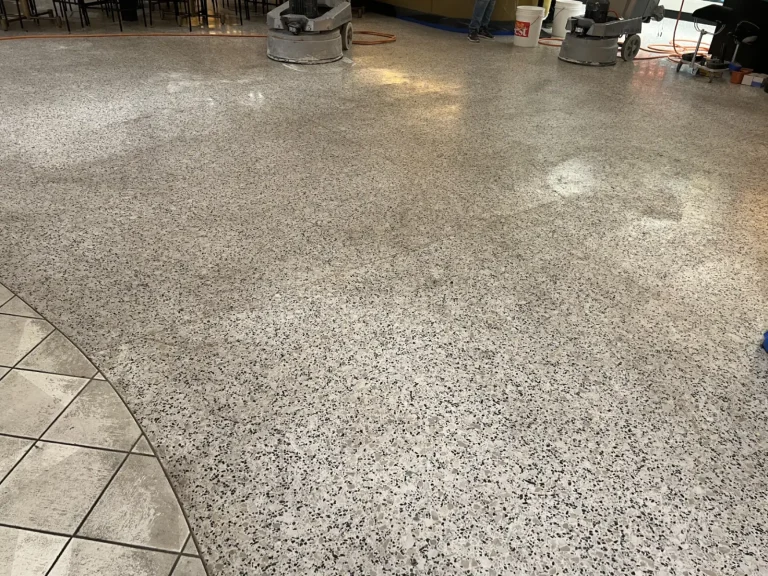
Cleaning terrazzo floors properly helps maintain their polished appearance and prevent residue buildup. The examples below show common cleaning practices used to keep terrazzo surfaces clean and well maintained.


Images shown here are from real restoration projects performed by NextGen Surface Care and are included for educational purposes to demonstrate professional stone restoration techniques.
Do’s and Don’ts of Cleaning Terrazzo Floors
Do:
- Dust mop or sweep terrazzo floors frequently to remove dirt and grit
- Use pH-neutral cleaners designed for terrazzo or natural stone surfaces
- Mop floors with clean water to remove cleaning residue
- Use soft mops or microfiber tools that won’t scratch the surface
- Place floor mats at entrances to reduce dirt tracked onto terrazzo floors
Don’t:
- Use acidic cleaners such as vinegar or lemon-based products
- Scrub terrazzo floors with abrasive pads or stiff brushes
- Allow soap residue to remain on the surface after cleaning
- Use harsh chemicals that can dull the terrazzo finish
- Ignore buildup that may cause the floor to appear cloudy or dull
For homeowners looking to go deeper into proper terrazzo maintenance, our Terrazzo Care Guides and Surface IQ resources provide detailed, surface-specific insights to help protect travertine and other natural stone surfaces over time.
When It’s Time to Call a Professional
While regular cleaning helps maintain terrazzo floors, some conditions require professional care. Heavy residue buildup, dull finishes, or embedded dirt may not respond to normal cleaning methods and often require specialized restoration techniques.
Professional terrazzo cleaning services can deep clean the surface, remove buildup, and restore the floor’s shine through honing and polishing methods designed specifically for terrazzo surfaces.
- Persistent haze or dullness that remains after normal cleaning
- Heavy residue buildup affecting the floor’s shine
- Deep embedded dirt in textured terrazzo surfaces
- Uneven finish or worn areas on polished terrazzo floors
- Stains that do not respond to standard cleaning methods
- Yellowing of the coating
Explore Terrazzo Floor Restoration Case Studies
If you’d like to see how professional terrazzo floor restoration improves the appearance of worn or dull terrazzo surfaces, explore our completed case studies. These projects demonstrate how proper cleaning and polishing techniques restore terrazzo floors in real environments.