Guide to Protecting Marble Countertops
Marble countertops add timeless beauty and elegance to kitchens and bathrooms, but they require proper care to maintain their polished appearance. Because marble is a natural stone composed primarily of calcium carbonate, it can be sensitive to acids, staining liquids, and abrasive cleaning methods.
Protecting marble countertops involves understanding how the surface reacts to everyday use and choosing cleaning and maintenance practices that preserve the finish. With proper care, marble countertops can remain beautiful and durable for many years.
Understanding Marble Countertop Surfaces
Marble countertops are formed from natural limestone that has undergone heat and pressure within the earth, creating the distinctive veining patterns that make marble so desirable. The polished surface of marble reflects light beautifully, giving countertops a luxurious appearance.
However, marble is also a porous and calcium-based material. This means it can absorb certain liquids and react with acidic substances such as citrus, vinegar, and some cleaning products. Understanding these characteristics is essential for protecting marble countertops from damage.
Common Issues That Affect Marble Countertops
- Etching marks caused by acidic foods or cleaning products
- Dark stains from oils, wine, coffee, or other liquids
- Water spots or mineral deposits from standing water
- Surface dullness caused by improper cleaning products
- Small scratches or wear from daily kitchen use
Why Marble Countertops Develop Stains and Etching
Marble countertops are composed primarily of calcium carbonate, which makes them vulnerable to chemical reactions with acidic substances. When acidic foods or cleaners come into contact with marble, they can react with the surface and leave behind dull marks known as etching.
In addition, marble is naturally porous, which means certain liquids can penetrate the surface if they are left sitting for too long. Oils, coffee, wine, and other common kitchen substances may cause staining if they are not cleaned promptly. Understanding these properties helps homeowners protect marble countertops from everyday damage.
Can You Protect Marble Countertops Yourself?
Many aspects of marble countertop care can be handled with proper daily maintenance and the right cleaning products. Using pH-neutral stone cleaners, wiping spills quickly, and avoiding harsh chemicals can help protect the marble surface from damage.
However, it is important to recognize the limitations of DIY care. Certain issues such as deep staining, heavy etching, or loss of polish may require professional restoration to fully correct the surface and restore its shine.
Simple Ways to Protect Marble Countertops
- Clean marble surfaces using pH-neutral stone cleaners
- Wipe spills immediately to prevent liquids from penetrating the stone
- Use cutting boards to protect marble from scratches and acidic foods
- Place coasters under drinks to prevent etching and water rings
- Apply stone sealers periodically to help reduce staining risk
When Marble Countertops Need Professional Care
- While routine cleaning and sealing help protect marble countertops, some issues require professional restoration. Deep stains, significant etching, or surfaces that have lost their polished finish often cannot be corrected with household cleaning products.
- Professional stone restoration specialists can remove stains, hone the marble surface to eliminate etching, and polish the stone to restore its natural shine. Proper restoration can significantly improve the appearance and longevity of marble countertops.
Professional Marble Countertop Restoration
Professional marble restoration services can address stains, etching, and surface dullness that develop over time. Specialized techniques such as honing and polishing restore the marble’s smooth finish while preserving the natural beauty of the stone.
In addition to restoring the surface, professionals can apply high-quality sealers that help protect marble countertops from future staining. Proper restoration and sealing help extend the life and appearance of marble surfaces in kitchens and bathrooms.
Example of a Well-Maintained Marble Countertop
A properly maintained marble countertop should have a smooth polished surface with consistent reflection and minimal staining or etching. Regular cleaning with pH-neutral stone cleaners and prompt spill removal helps preserve the marble’s natural beauty and protect the surface from damage.
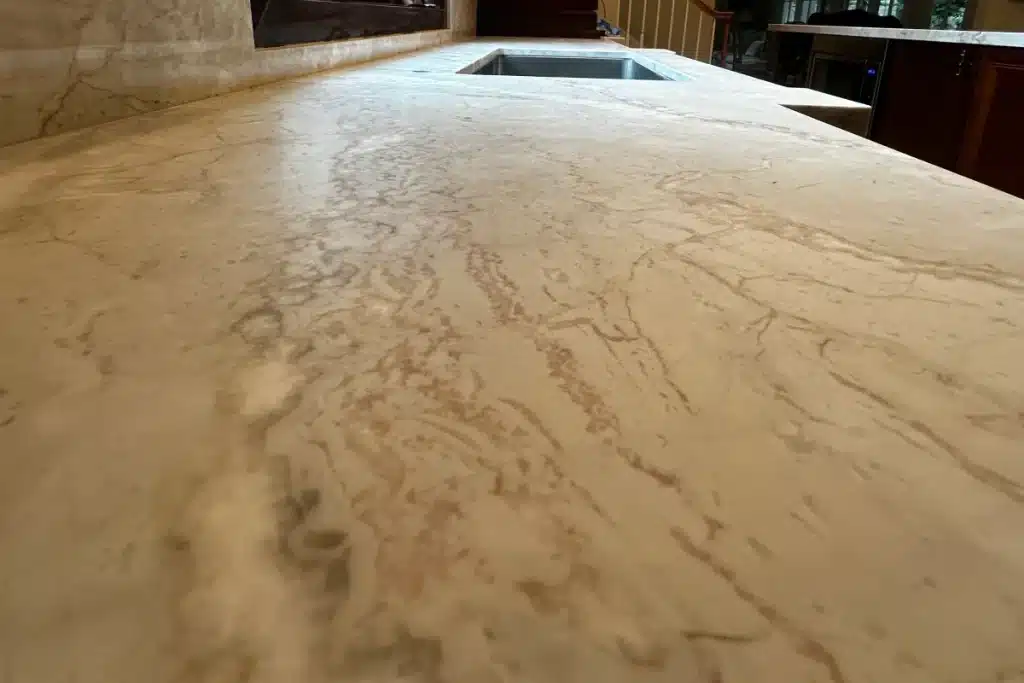
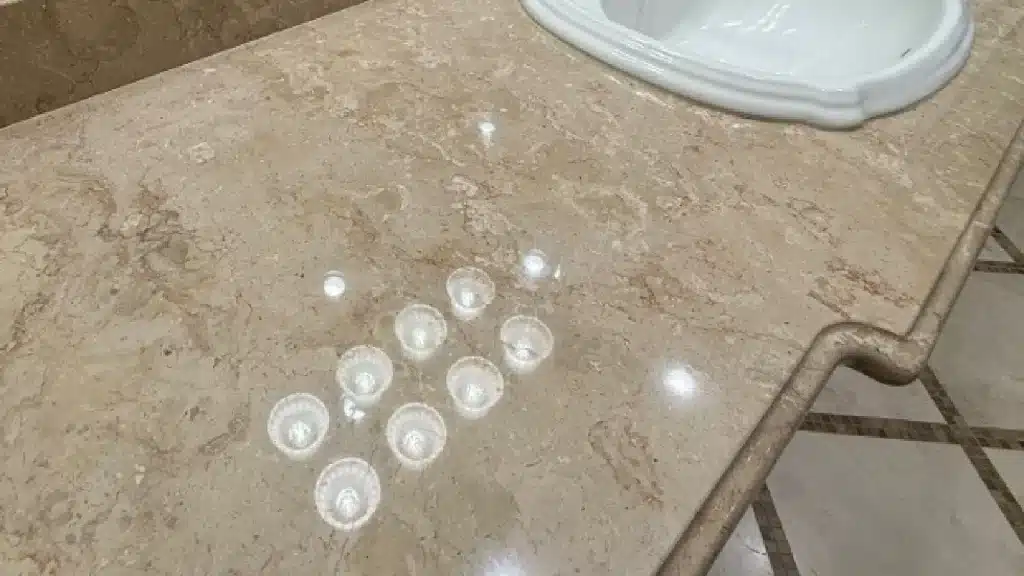
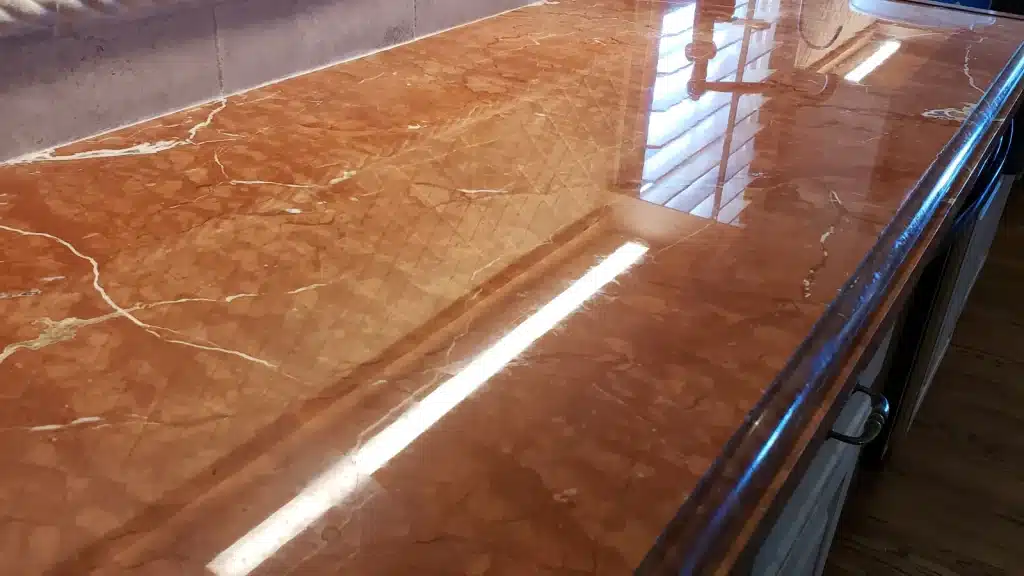
Images shown here are from real restoration projects performed by NextGen Surface Care and are included for educational purposes to demonstrate professional stone restoration techniques.
Do’s and Don’ts of Travertine Floor Care
Do:
- Clean marble countertops regularly with pH-neutral stone cleaners
- Wipe spills immediately to prevent staining or etching
- Use cutting boards when preparing food on marble surfaces
- Place coasters under drinks to prevent ring marks
- Seal marble countertops periodically to help protect the surface
Don’t:
- Use acidic cleaners such as vinegar, lemon, or bleach
- Place hot pans directly on the marble surface
- Scrub marble with abrasive pads or harsh chemicals
- Allow liquids such as wine, oil, or coffee to sit on the surface
- Ignore early signs of etching or staining
For homeowners looking to go deeper into proper marble stone maintenance, our Care Guides and Surface IQ resources provide detailed, surface-specific insights to help protect travertine and other natural stone surfaces over time.
When It’s Time to Call a Professional
While routine maintenance can protect marble countertops, certain issues require professional restoration. Deep stains, etched surfaces, or areas where the polish has worn away may need specialized treatment to restore the stone’s finish.
Professional stone restoration technicians can remove stains, hone away etching, and polish marble countertops to restore their smooth reflective surface. Proper restoration helps extend the lifespan and beauty of marble surfaces.
- Deep stains that do not respond to normal cleaning
- Etching marks caused by acidic substances
- Dull areas where the marble has lost its polish
- Scratches or surface wear from daily use
- Uneven shine across the countertop surface
Explore Marble Restoration Case Studies
If you’d like to see how professional marble restoration improves the appearance of worn or etched marble surfaces, explore our completed case studies. These projects demonstrate how proper restoration techniques bring marble countertops back to life.