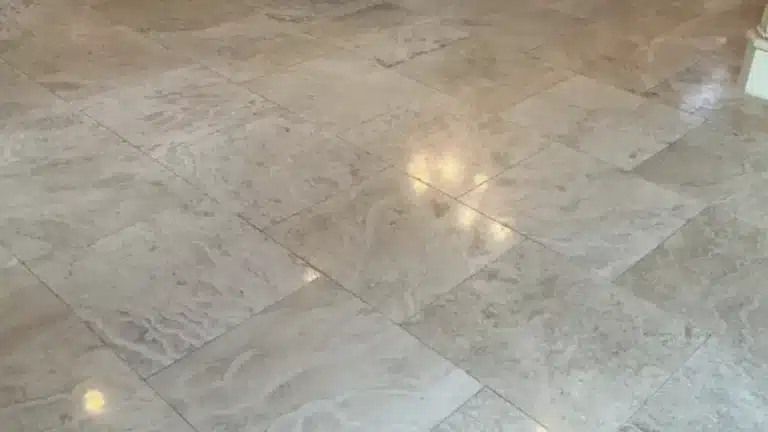
Dull Travertine Floors: Causes and How Restoration Fixes Them
Dull travertine floors are a common issue in homes with natural stone flooring. Over time, traffic wear, residue buildup, and microscopic scratches can cause travertine to lose its natural shine.Travertine floors are known for their natural beauty and timeless appearance, but like any natural stone surface, they can begin to look dull over time. In many homes, the floor may appear cloudy or worn even after regular cleaning.
This usually happens because the stone’s finish gradually wears down from foot traffic, abrasive dirt, and microscopic scratches that scatter light instead of reflecting it evenly.
Understanding why travertine floors lose their shine can help homeowners identify the problem early and determine whether simple maintenance or professional restoration is the right solution.
Understanding Why Travertine Floors Lose Their Shine
Travertine is a natural limestone that contains calcium-based minerals and small surface pores. When the surface is properly finished and maintained, the stone reflects light evenly and appears smooth and vibrant.
Over time, however, daily use can begin to affect the stone’s finish. Small particles of dirt carried in on shoes can act like fine sandpaper, slowly creating microscopic scratches across the surface. These scratches are often invisible individually, but collectively they reduce the stone’s ability to reflect light evenly.
When this happens, the floor begins to look cloudy, worn, or dull.
Common Causes of Dull Travertine Floors in Homes
Several factors can contribute to dullness in travertine flooring:
- Foot traffic wear in entryways, kitchens, and hallways
- Abrasive dirt and debris carried in from outside
- Improper cleaning products that leave residue on the stone
- Micro-scratches from dry dust mopping or abrasive pads
- Loss of polish over time as the finish gradually wears down
Some of these issues can be improved through proper cleaning, while others require professional refinishing to restore the stone’s surface. For example, if dull areas appear in specific traffic patterns, it may indicate that the stone’s finish has worn down and needs restoration.
If your travertine floor looks cloudy or worn even after cleaning, our guide on Dullness on Travertine explains the causes and how to determine whether restoration may be needed.
Can You Restore the Shine Yourself?
In some cases, dullness may simply be caused by residue from household cleaners. Start by cleaning the floor using a pH-neutral stone cleaner designed for natural stone. Rinse the floor thoroughly and allow it to dry completely.
If the surface still appears dull after proper cleaning, the issue may be related to wear in the stone’s finish rather than residue on the surface. Minor cosmetic issues can sometimes be improved with proper maintenance, but deeper wear patterns typically require professional honing and polishing.
How Professionals Restore Dull Travertine Floors
Professional stone restoration focuses on refinishing the surface of the stone rather than covering it with coatings.
The restoration process typically includes:
• Thorough cleaning and surface preparation
• Diamond honing to remove scratches and wear
• Progressive polishing to restore clarity and reflectivity
• Filling of small voids or holes if needed
• Sealing to help protect the stone
This process removes microscopic surface damage and restores the natural finish of the stone.
Visual Example of Travertine Floor Restoration
These examples show how professional restoration can dramatically improve the appearance of worn travertine floors.
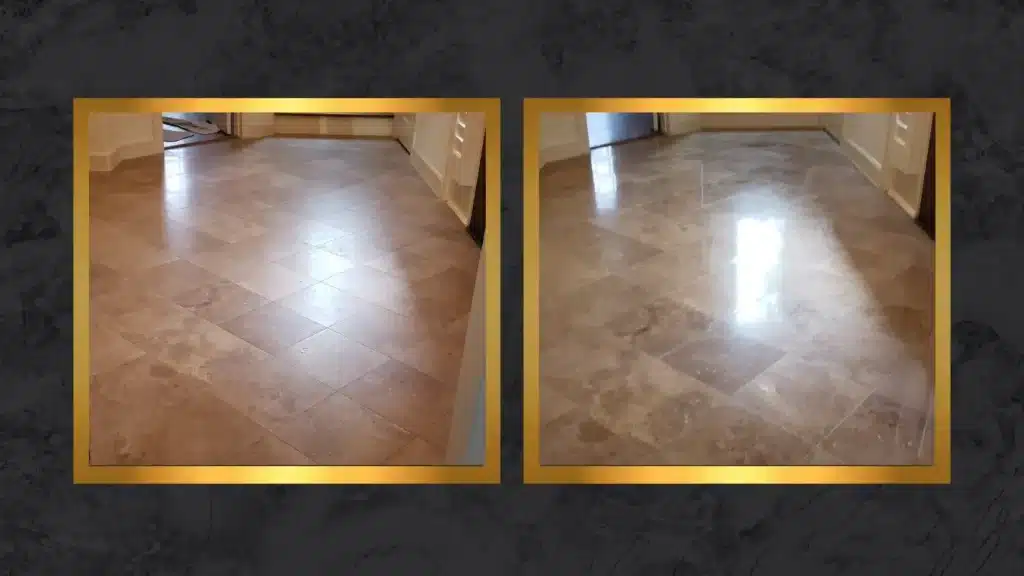

Images shown here are from real restoration projects performed by NextGen Surface Care and are included for educational purposes to demonstrate professional stone restoration techniques.
Do’s and Don’ts for Maintaining Travertine Floors
Do:
- Use pH-neutral stone cleaners designed for natural stone
- Dust mop or vacuum regularly to remove abrasive debris
- Wipe up spills promptly to reduce staining risk
- Use felt pads under furniture to prevent surface scratching
- Follow stone-specific care guidelines for routine maintenance
Don’t:
- Use vinegar, bleach, or acidic household cleaners
- Scrub with abrasive pads or brushes
- Allow spills to sit on the surface for extended periods
- Assume sealers make travertine completely stain-proof
- Rely on generic floor care advice not intended for natural stone
For homeowners looking to go deeper into proper stone maintenance, our Care Guides and Surface IQ resources provide detailed, surface-specific insights to help protect travertine and other natural stone surfaces over time.
When It’s Time to Call a Professional
While routine maintenance can help slow wear, certain travertine floor issues indicate that professional restoration is needed to properly correct the problem and prevent further damage. These conditions typically require specialized equipment, materials, and experience to restore the stone safely and effectively.
- Etching or dullness that does not improve with normal cleaning
- Uneven surface finish or inconsistent sheen across the floor
- Cracks that continue to widen or reappear over time
- Stains that return after repeated cleaning attempts
- Surface damage that can be felt underfoot
See Real Travertine Floor Restoration Examples
If you’d like to see how professional travertine floor repairs and restoration addresses these issues in real homes, explore our completed case studies showcasing before-and-after results achieved through proven restoration methods.