Is My Natural Stone Really Stained or Is It Surface Damage?
Understanding Stains vs. Surface Damage in Natural Stone
Many homeowners ask the question: is my natural stone really stained, or is the mark caused by something else such as etching or residue? Natural stone surfaces such as marble, travertine, limestone, and granite can develop spots or discoloration over time. While these marks are often assumed to be stains, many are actually caused by different types of surface damage or residue.
Understanding the difference between true staining and other common issues—such as etching, mineral buildup, or trapped moisture—can help homeowners determine the correct solution without risking further damage to the stone.
Common Issues Mistaken for Stone Stains
- Acid etching that leaves dull or light-colored spots on marble or travertine
- Mineral deposits or hard water residue on shower floors and countertops
- Soap scum or cleaning product buildup on sealed stone surfaces
- Moisture trapped beneath the stone causing temporary dark spots
- Organic staining from food, oils, or beverages penetrating porous stone
Why Natural Stone Develops Stains and Etching
Natural stone is formed through geological processes that create microscopic pores and mineral structures within the material. Because of this natural porosity, certain liquids, oils, and contaminants can penetrate the stone’s surface and cause discoloration over time.
At the same time, many stones such as marble, travertine, and limestone are calcium-based materials. When acidic substances like citrus juice, vinegar, or harsh cleaners come into contact with the surface, they can chemically react with the stone and create dull spots known as etching. These marks are often mistaken for stains even though the issue is actually surface damage rather than absorbed discoloration.
Can You Remove Stone Stains Yourself?
Some minor discoloration on natural stone can be addressed with proper cleaning techniques, but it is important to correctly identify the issue first. What appears to be a stain may actually be etching, mineral buildup, or residue from cleaning products.
Before attempting any DIY stain removal methods, homeowners should determine whether the discoloration is truly absorbed into the stone or simply affecting the surface. Using the wrong cleaning approach—especially acidic or abrasive products—can worsen the problem and damage the stone finish.
Cleaning Steps to Try Before Professional Restoration
- Clean the surface using a pH-neutral cleaner designed for natural stone
- Rinse the area thoroughly to remove any soap or chemical residue
- Dry the surface completely to check if the dark spot was caused by trapped moisture
- Use a stone-safe poultice if a true oil or organic stain is suspected
- Avoid acidic or abrasive cleaners that can worsen etching
When Stone Discoloration Requires Professional Help
If discoloration remains after proper cleaning, the issue may be deeper than a simple surface stain. Etching, embedded oils, mineral deposits, or worn stone finishes often require professional restoration techniques to correct the surface safely.
Stone restoration professionals can evaluate whether the problem is true staining, chemical etching, or surface damage. From there, they can apply the appropriate treatment such as poultice stain removal, honing to remove etching, or professional cleaning and sealing to restore the stone’s appearance.
Professional Natural Stone Stain and Surface Repair
When natural stone surfaces develop stains, etching, or persistent discoloration, professional stone restoration can help determine the true cause and apply the correct treatment. Identifying whether the issue is staining, chemical etching, or residue buildup is essential before attempting corrective work.
Professional stone care technicians use specialized cleaning methods, poultices, and surface refinishing techniques to safely restore the stone’s appearance. In many cases, honing or polishing the surface can remove etching, while targeted stain removal treatments address discoloration trapped within the stone.
Examples of Stains vs Etching on Natural Stone
Natural stone discoloration can appear in several ways depending on the underlying cause. Some spots are true stains caused by liquids penetrating the stone, while others are surface damage such as etching or residue buildup. The examples below illustrate common situations homeowners encounter when they believe their stone is stained.

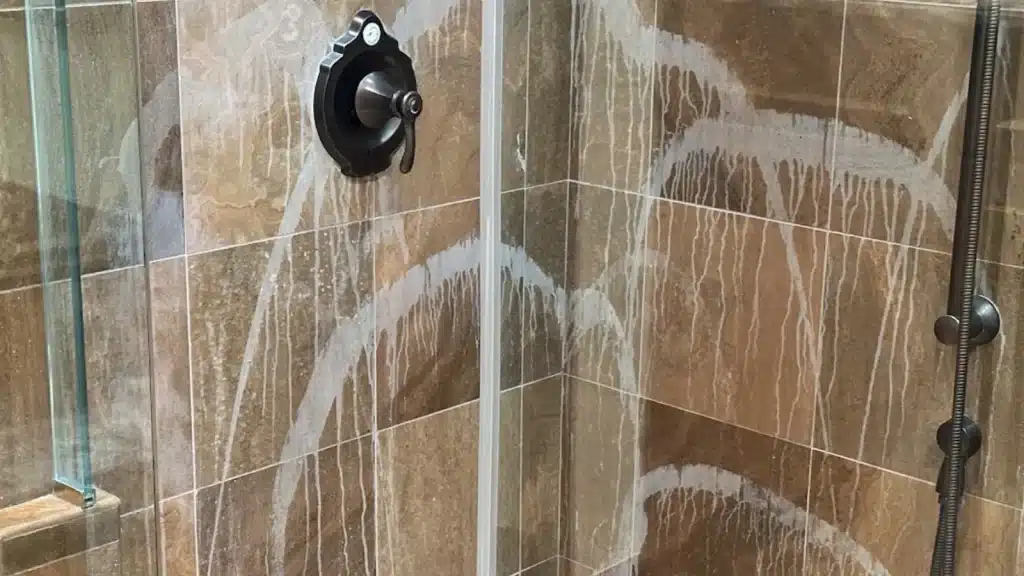
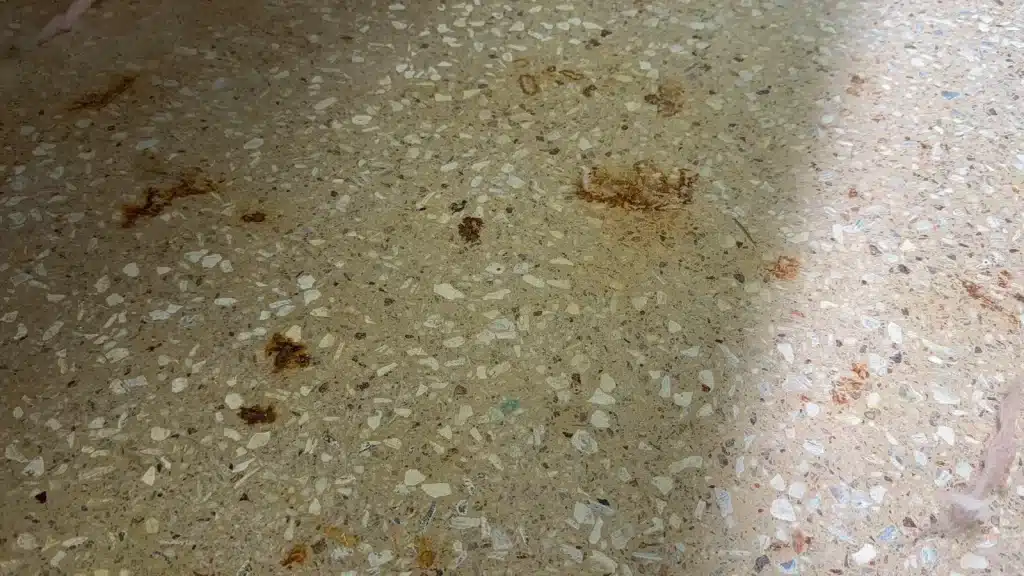
Images shown here are from real restoration projects performed by NextGen Surface Care and are included for educational purposes to demonstrate professional stone restoration techniques.
Do’s and Don’ts of Cleaning Natural Stone
Do:
- Clean natural stone regularly using pH-neutral stone cleaners
- Wipe spills quickly before liquids can penetrate the surface
- Use soft microfiber cloths or mops to avoid scratching the finish
- Maintain stone sealers to help reduce staining risk
- Test cleaning products in a small area before full application
Don’t:
- Use vinegar, lemon, bleach, or acidic household cleaners
- Assume every dark mark on stone is a stain
- Scrub marble or travertine with abrasive pads or brushes
- Leave spills sitting on porous stone surfaces
- Attempt aggressive stain removal methods without identifying the problem
For homeowners who want to better understand how different types of natural stone react to stains, acids, and cleaning products, our Care Guides and Surface IQ resources provide surface-specific insights. These guides explain how to properly maintain marble, travertine, limestone, granite, and other natural stone materials over time.
When It’s Time to Call a Professional
While many minor spots on natural stone can be addressed with proper cleaning, some discoloration indicates deeper issues that require professional evaluation. True stains that have penetrated the stone, acid etching that has damaged the finish, or mineral deposits that have bonded to the surface often need specialized restoration techniques.
Professional stone care technicians can determine whether the issue is staining, etching, or surface residue and recommend the correct treatment. This may involve professional cleaning, stain removal poultices, honing to remove etching, or refinishing the stone surface to restore its original appearance.
- Dull rings or spots that remain after normal cleaning
- Dark stains that reappear after attempting stain removal
- Etching marks caused by acidic spills or cleaners
- Uneven shine or rough patches on polished stone
- Discoloration that continues to spread or worsen
Explore Real Natural Stone Restoration Case Studies
If you’d like to see how professional stone restoration corrects etching, stains, and surface damage in real homes, explore our completed case studies. These projects demonstrate how proper cleaning, honing, and polishing techniques restore the natural appearance of stone surfaces.