
Expert Tips for Restoring Granite Countertops
Granite countertops are valued for their durability and natural beauty, making them one of the most popular surfaces used in kitchens and bathrooms. While granite is harder and less porous than many other natural stones, it can still develop stains, dull areas, or residue buildup over time.
Restoring granite countertops often involves addressing these issues through proper cleaning, polishing, and protective maintenance. With the right restoration techniques, granite surfaces can regain their original shine and continue to perform well in daily environments.
Understanding Granite Countertop Surfaces
Granite countertops are formed from igneous rock created by intense heat and pressure deep within the earth. This process produces a dense stone surface composed primarily of quartz, feldspar, and other durable minerals.
Because granite is harder and less porous than stones such as marble or limestone, it is generally more resistant to scratching and staining. However, granite countertops can still develop dull spots, residue buildup, or staining if they are not properly cleaned and maintained.
Common Issues That Affect Granite Countertops
- Stains from oils, wine, coffee, or food preparation
- Soap or cleaner residue that dulls the granite surface
- Water spots or mineral buildup near sinks or faucets
- Dull areas caused by improper cleaning products
- Loss of shine due to worn sealers or heavy use
Why Granite Countertops Lose Their Shine
Granite countertops can lose their shine when residue from cleaning products, soap, or hard water builds up on the surface. Over time, this buildup can create a cloudy appearance that prevents the stone from reflecting light properly.
In other cases, granite may appear dull when the protective sealer has worn away or when improper cleaning products have been used. Although granite is very durable, maintaining its natural shine requires proper cleaning techniques and periodic sealing to protect the stone.
Can You Restore Granite Countertops Yourself?
Some aspects of granite countertop restoration can be addressed with proper cleaning and maintenance. Removing residue buildup, using pH-neutral stone cleaners, and resealing the surface when needed can often restore the natural shine of granite.
However, certain problems such as deep stains, surface etching from improper cleaners, or worn finishes may require professional restoration techniques. Understanding the difference between routine maintenance and true restoration is important when caring for granite countertops.
Simple Ways to Restore and Maintain Granite Countertops
- Clean granite countertops regularly with pH-neutral stone cleaners
- Remove soap or cleaning residue with clean water and a microfiber cloth
- Dry the surface after cleaning to prevent water spots or mineral buildup
- Reapply a granite sealer periodically to help protect the surface
- Use cutting boards and coasters to reduce daily wear on the stone
When Granite Countertops Need Professional Restoration
- While routine cleaning and sealing can help maintain granite countertops, some problems require professional restoration. Deep stains, stubborn residue buildup, or areas where the surface has lost its shine may not respond to standard household cleaning methods.
- Professional stone restoration specialists can deep clean the surface, remove embedded contaminants, and polish the granite to restore its natural clarity and shine. In some cases, specialized treatments or refinishing techniques may be needed to fully restore the appearance of the countertop.
Professional Granite Countertop Restoration
Professional granite countertop restoration can address stains, residue buildup, and dull surfaces that develop over time. Using specialized cleaning and polishing techniques, stone restoration professionals can restore the natural clarity and shine of granite countertops.
In addition to restoring the surface, professionals may apply high-quality sealers designed to protect granite from staining and everyday wear. Proper restoration and sealing help extend the life and appearance of granite surfaces in kitchens and bathrooms.
Example of a Restored Granite Countertop
A properly restored granite countertop should have a smooth polished surface with consistent reflection and minimal residue or staining. Regular cleaning and proper sealing help maintain the stone’s natural durability and shine.
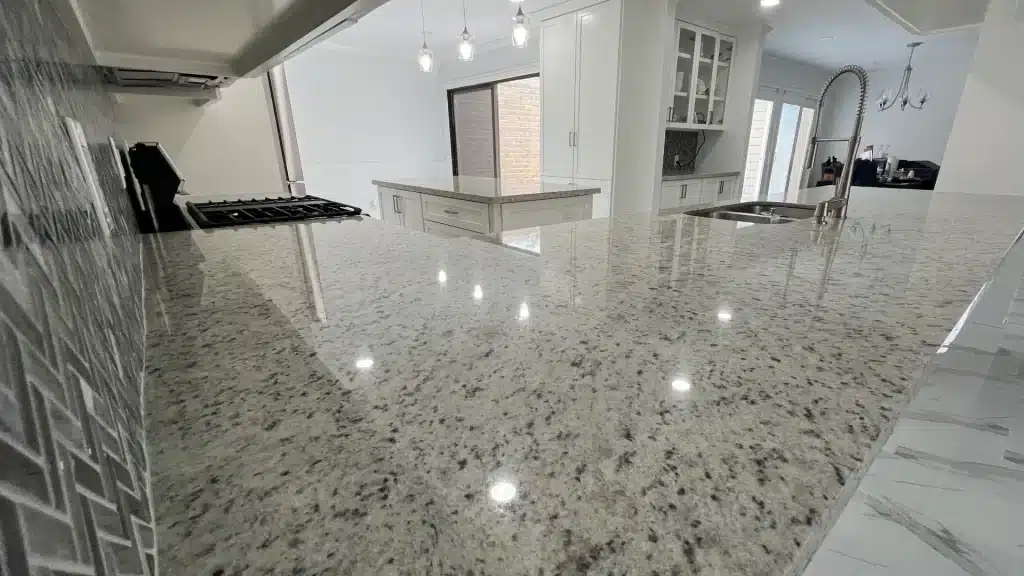
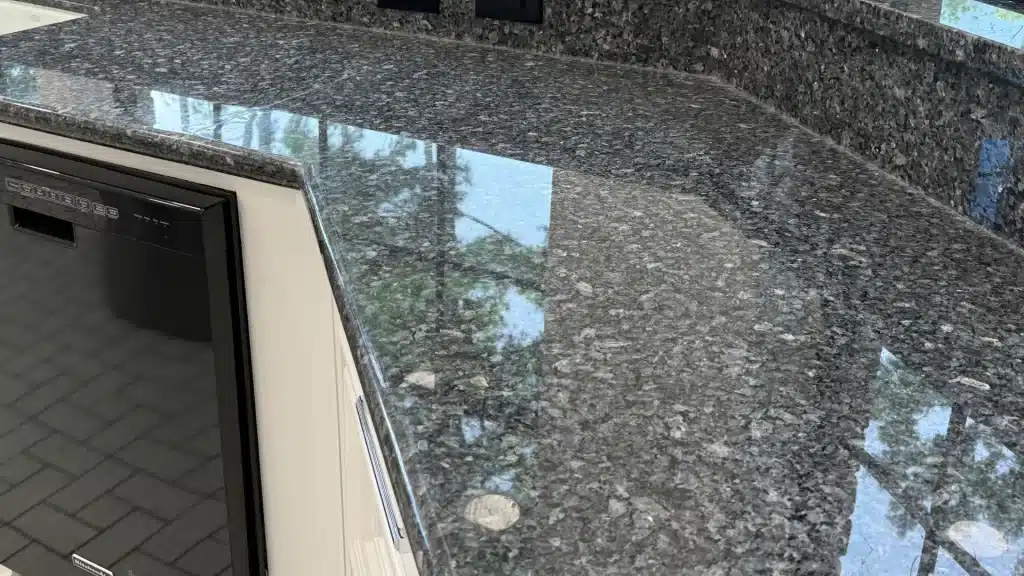
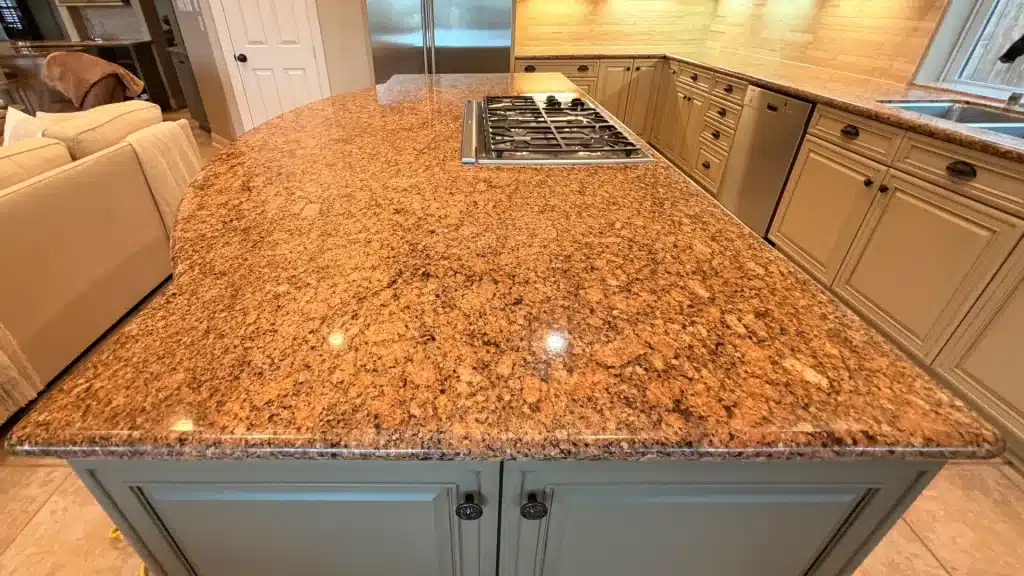
Images shown here are from real restoration projects performed by NextGen Surface Care and are included for educational purposes to demonstrate professional stone restoration techniques.
Do’s and Don’ts of Granite Countertop Care
Do:
- Clean granite countertops regularly using pH-neutral stone cleaners
- Wipe spills promptly to prevent staining
- Use microfiber cloths to protect the surface finish
- Reseal granite periodically to maintain protection
- Use cutting boards and coasters to reduce daily wear
Don’t:
- Use vinegar, bleach, or acidic cleaners on granite surfaces
- Scrub the surface with abrasive pads or harsh chemicals
- Allow oils, wine, or food residue to sit on the surface
- Use generic household cleaners not intended for stone
- Ignore signs that the protective sealer has worn away
Following proper maintenance practices helps preserve the polished appearance of granite countertops while reducing the risk of staining or surface dullness. Using the right cleaning products and protective habits keeps granite surfaces looking their best for many years. For homeowners looking to go deeper into proper granite stone maintenance, our Granite Care Guide and Surface IQ resources provide detailed, surface-specific insights to help protect granite and other natural stone surfaces over time.
When It’s Time to Call a Professional
While regular cleaning and maintenance help preserve granite countertops, certain problems require professional restoration. Deep stains, heavy residue buildup, or surfaces that have lost their shine may not respond to standard household cleaning methods.
Professional stone restoration technicians can deep clean the surface, remove embedded contaminants, and polish the granite to restore its natural clarity and shine. In some cases, specialized treatments or refinishing techniques may be needed to fully restore the appearance of the countertop.
- Deep stains that remain after repeated cleaning attempts
- Dull areas where the granite surface has lost its shine
- Heavy residue buildup affecting the countertop’s appearance
- Scratches or surface wear from years of use
- Uneven shine across different areas of the countertop
Explore Granite Countertop Restoration Case Studies
If you’d like to see how professional granite restoration improves the appearance of worn or dull countertops, explore our completed case studies. These projects demonstrate how proper cleaning, polishing, and sealing techniques restore granite surfaces in real homes.