
Home > Care Guides > Quartz
Quartz Care Guide
Professional care guidance to help prevent heat damage, surface discoloration, and long-term wear on engineered quartz surfaces.
Watch This Before Cleaning Quartz
Before using any cleaner on quartz, it’s important to understand that engineered quartz is non-porous and does not require sealing—but it can be damaged by excessive heat, harsh chemicals, and improper products. This short video explains common cleaning mistakes and how to properly care for quartz surfaces.
What You’ll Learn
Approx. 2 minutes
Daily & Weekly Care
Simple routines that help prevent surface discoloration, resin damage, and long-term wear—without harming engineered quartz.
Daily Routine
Avoid harsh chemicals, abrasive pads, or solvent-based cleaners that can damage the resin surface.
Weekly Routine
If dull spots or surface changes appear, stronger cleaners will not fix the issue and may worsen it.
Do’s & Don’ts
Following the right care practices helps protect engineered quartz surfaces and prevent avoidable discoloration, heat damage, and long-term wear.
Do’s
Use non-abrasive products and protect quartz from excessive heat.
Dont’s
Engineered quartz does not require sealing, and harsh chemicals are a more common cause of damage than everyday use.
Sealing & Protection
Engineered quartz is manufactured to be non-porous and typically does not require penetrating sealers. However, some slabs or fabrication areas may show minor surface absorption where professional evaluation may be appropriate. Improper products—especially waxes and coatings—are a far more common cause of issues.
Do I Need to Seal Quartz?
Penetrating sealers are not typically necessary for quartz and should only be considered in specific cases after professional assessment.
When & How to Seal
Topical coatings and waxes are a common cause of streaking, smudging, and dull appearance on quartz surfaces.
While engineered quartz does not chemically etch like marble, certain cleaners or acids can damage the resin surface and create dull areas that resemble etching.
Common Quartz Issues & Solutions
Most quartz issues are related to product misuse, heat exposure, or surface damage rather than staining or absorption. Some surface dulling may resemble etching but is typically resin damage rather than stone deterioration.
Common Issues
These issues are usually related to resin surface damage or improper product use—not natural stone etching.
What to Do
Some quartz surface damage may be permanent, and correction depends on severity and material composition.
Persistent dulling, heat marks, or edge darkening should be professionally evaluated to determine whether improvement is possible or if long-term management is required.
When to Call a Professional
Some quartz surface issues cannot be resolved with routine cleaning and require professional evaluation.
Signs You Need Professional Help
These issues often indicate resin surface damage or improper product application—not normal wear.
How Professionals Can Help
While some quartz damage can be improved, certain resin-related surface changes may not be fully reversible.
If your quartz surface shows persistent dulling, heat marks, or product-related haze, professional evaluation can determine whether improvement is possible or if long-term management is the best approach.
Professional Quartz Restoration Results
Examples of professionally restored quartz surfaces after surface dulling, buildup, discoloration, and product-related damage.
 Before and after quartz master bathroom countertop restoration performed by NextGen Surface Care.
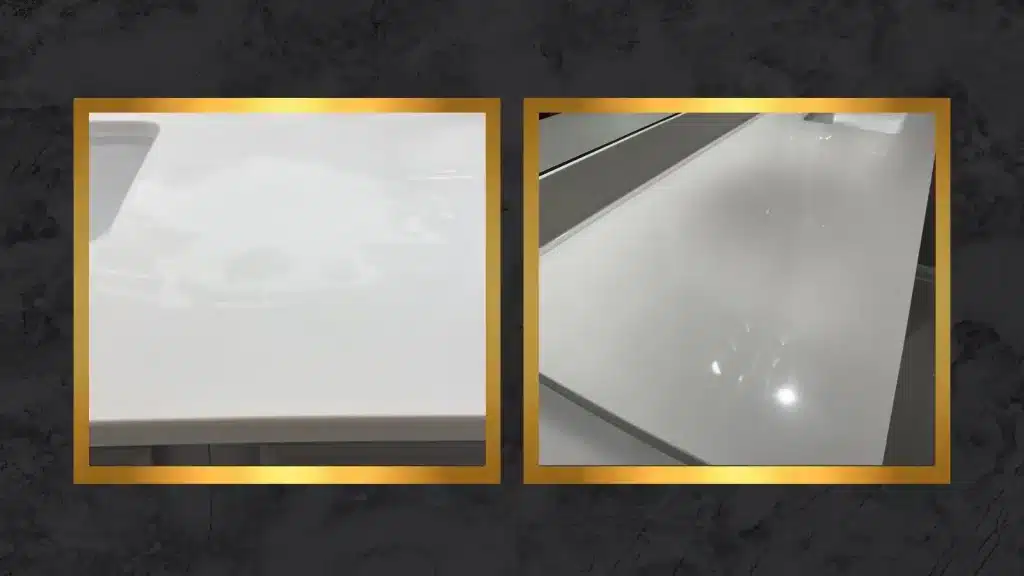 Before and after quartz countertop restoration performed by NextGen Surface Care.
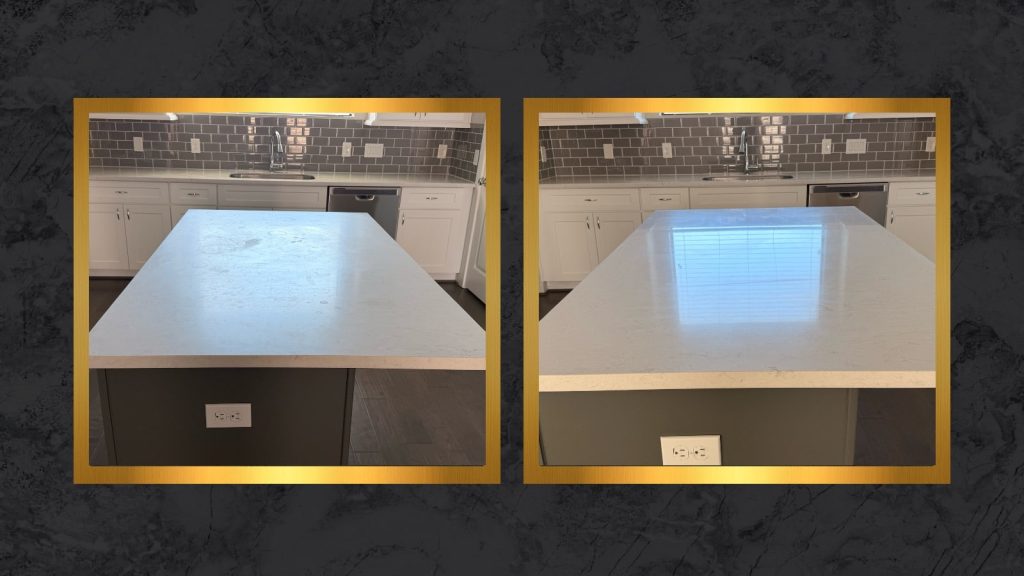 Before and after quartz countertop restoration performed by NextGen Surface Care.

Results vary depending on surface condition, material composition, and prior product use. Some quartz surface damage may not be fully reversible.
Prefer a Printable Guide?
Download or browse our interactive care guide for easy reference—keep it handy for quick maintenance reminders.