
Home > Care Guides > Soapstone
Soapstone Care Guide
Professional care guidance to help manage scratching, maintain appearance, and protect soapstone surfaces long-term.
Watch This Before Cleaning Soapstone
Before using any cleaner on soapstone, it’s important to understand that this dense, non-porous natural stone does not require sealing but can scratch and develop patina over time. This short video explains proper cleaning methods, oiling considerations, and how to maintain soapstone’s natural appearance.
What You’ll Learn
Approx. 2 minutes
Daily & Weekly Care
Simple routines that help maintain soapstone’s appearance, manage surface scratching, and support its natural patina over time.
Daily Routine
Soapstone is durable but soft—minor surface scratches are normal and part of its natural aging process.
Weekly Routine
Oiling is optional and affects appearance—not structural protection.
Do’s & Don’ts
Following the right care practices helps preserve marble’s natural finish and prevents avoidable damage.
Do’s
Soapstone maintenance is largely aesthetic—oiling and light refinishing are optional and appearance-driven.
Dont’s
Soapstone is durable but soft—minor scratches and surface changes are part of its natural aging process.
Sealing & Protection
Soapstone is naturally dense and non-porous, meaning it does not require penetrating sealers. Protection for soapstone is largely aesthetic and typically involves optional oiling rather than sealing.
Do I Need to Seal Soapstone?
Soapstone does not require sealing, and applying stone sealers offers no protective benefit.
When & How to Seal
Oiling enhances appearance but does not serve as a protective sealer.
If you’re unsure whether your marble needs sealing, a professional assessment can prevent unnecessary products or damage.
Common Soapstone Issues & Solutions
Most soapstone concerns are cosmetic rather than structural. Scratches, darkening changes, and surface variation are part of the material’s natural aging process.
Common Issues
These changes are typically cosmetic and do not indicate structural failure.
What to Do
Most soapstone surface issues can be managed or blended rather than fully “restored.”
If damage extends beyond surface scratching or cosmetic changes, professional repair may be recommended.
When to Call a Professional
While most soapstone changes are cosmetic, certain types of damage may benefit from professional repair or refinishing.
Signs You Need Professional Help
Uneven areas that do not blend with oiling or buffing
How Professionals Can Help
Professional repair can restore uniformity while preserving soapstone’s natural character.
If soapstone damage affects structure or appearance beyond typical wear, professional evaluation can determine the most appropriate corrective approach.
Professional Soapstone Restoration Results
If soapstone damage affects structure or appearance beyond typical wear, professional evaluation can determine the most appropriate corrective approach.
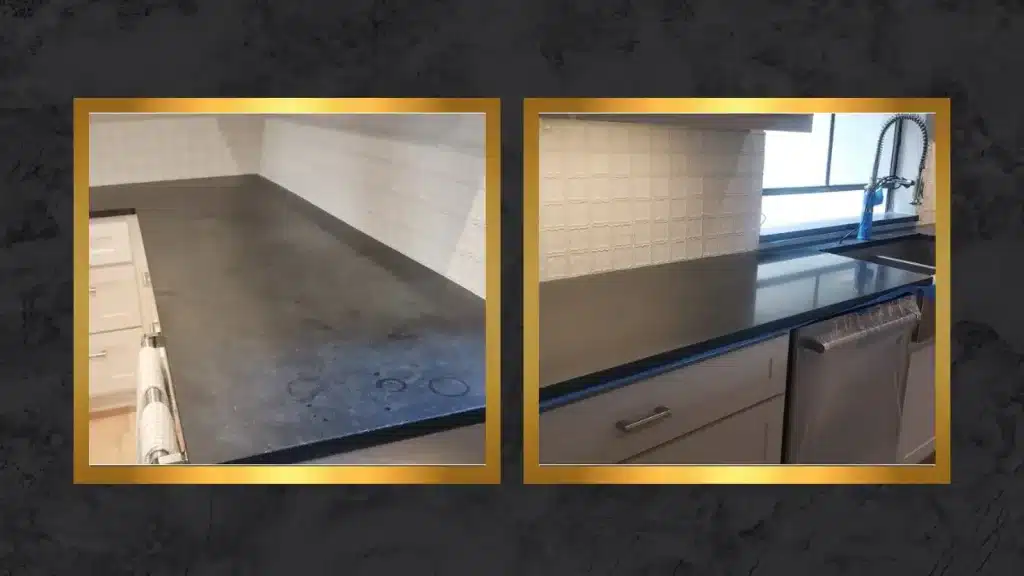 Worn soapstone countertop restored for a more even finish
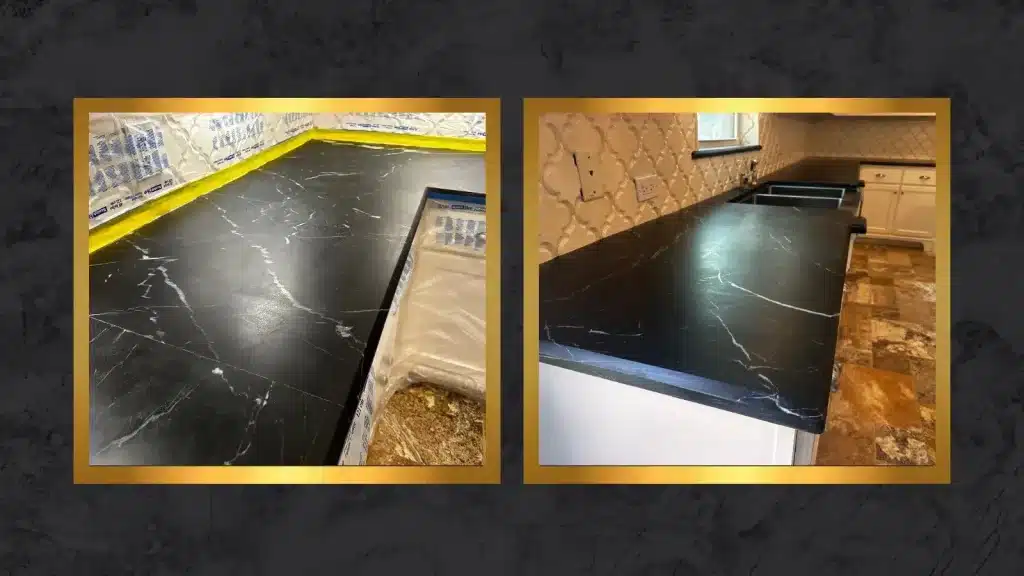 Soapstone kitchen countertop before and after professional restoration
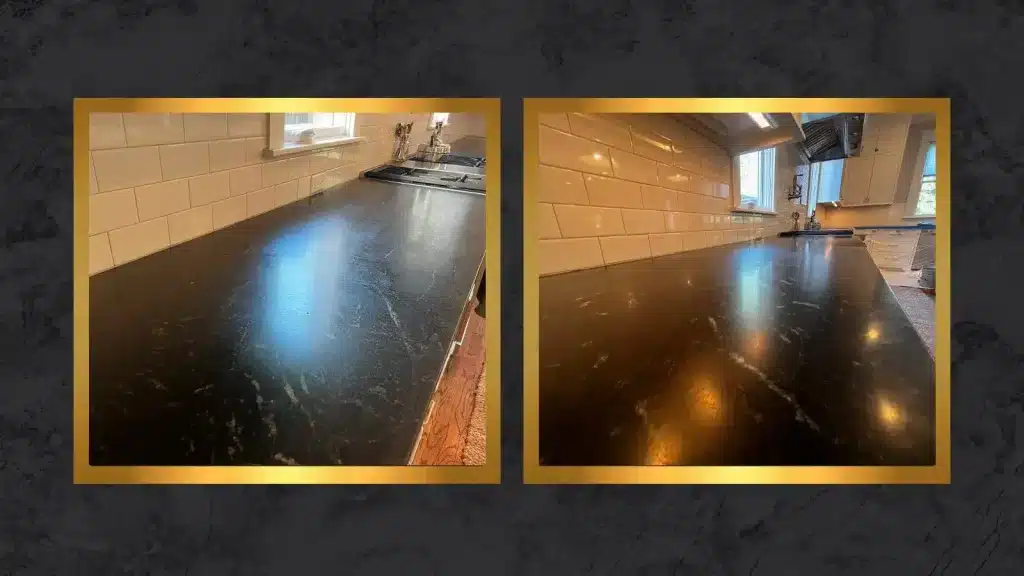 Soapstone countertop near stove cleaned and restored
Results vary depending on surface condition and prior care. Minor surface scratching and patina development are natural characteristics of soapstone.
Prefer a Printable Guide?
Download or browse our interactive care guide for easy reference—keep it handy for quick maintenance reminders.