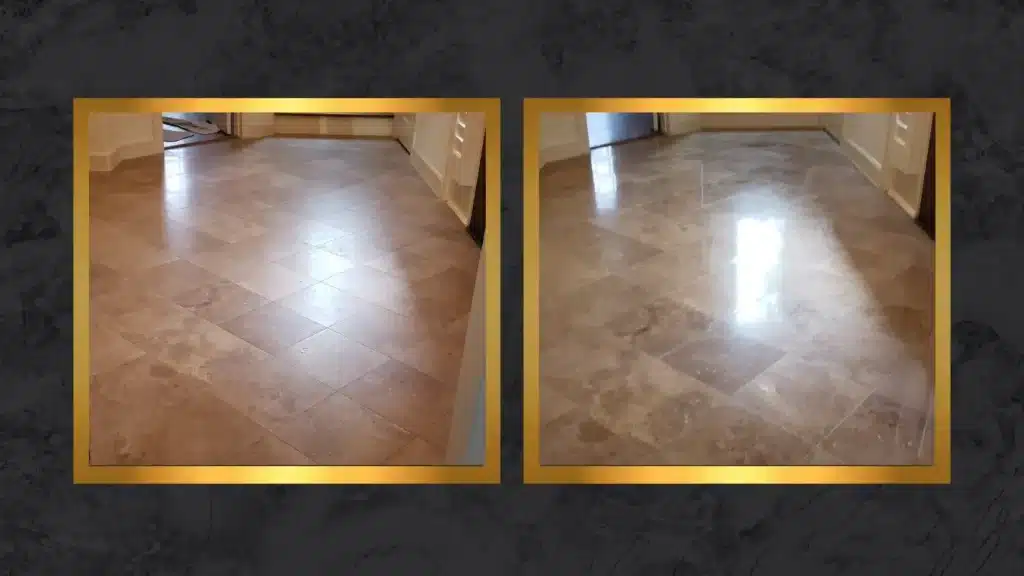
The Challenge
Travertine floor polishing was required in this Bellaire home after years of wear left the stone scratched, etched, and visibly dull. The natural voids within the unfilled travertine had accumulated embedded dirt, creating darkened areas that routine cleaning could not remove.
Previous maintenance efforts had improved surface cleanliness but were unable to restore clarity or eliminate deep scratches from everyday foot traffic. The homeowners wanted to correct the wear and refresh the appearance of their travertine floors without pursuing full replacement. A detailed assessment confirmed the stone remained structurally sound and well-suited for professional grinding, honing, filling, and polishing.
Travertine is a naturally porous limestone with open voids that can trap soil and moisture over time. In high-traffic areas, this buildup becomes embedded within the stone’s surface texture, making routine cleaning ineffective. As scratches and etching accumulate, light no longer reflects evenly, causing the floor to appear older and more worn than it structurally is.
The Restoration Process
The restoration began with deep cleaning to extract embedded soil from the natural voids and surface texture of the travertine. Once contaminants were removed, diamond grinding was performed to eliminate scratches and correct etched areas.
After grinding, the floor was honed to refine the surface and create a consistent foundation for polishing. Voids and small holes were filled to restore surface continuity and prevent future soil accumulation. The final polishing stage enhanced reflectivity and produced a uniform finish across the installation. An impregnating sealer was applied to help reduce moisture penetration and support long-term maintenance.
The Results
The completed travertine floor polishing restored a reflective, uniform finish across the entire installation. Deep scratches and etched areas were removed during the grinding phase, and previously darkened voids were cleaned and properly filled to create a more consistent surface appearance.
With polishing complete, the travertine now reflects light evenly throughout the space, enhancing the natural character of the stone while eliminating the dull, worn look caused by years of traffic. The application of an impregnating sealer supports ongoing maintenance and helps reduce future soil intrusion within the stone’s natural pores.
This project involved professional travertine floor polishing to correct surface wear, remove scratches, and restore a consistent polished finish. If you’d like to learn more about how travertine floor restoration can improve the appearance and longevity of your stone surfaces, you can explore our travertine services here.
Before & After Results
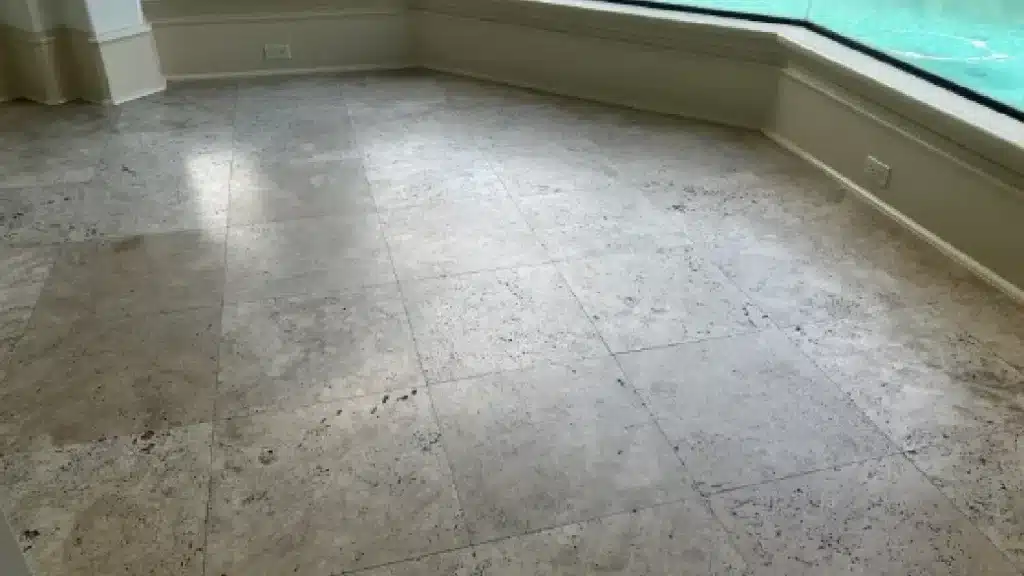
Travertine floor prior to grinding and polishing with visible wear and soil 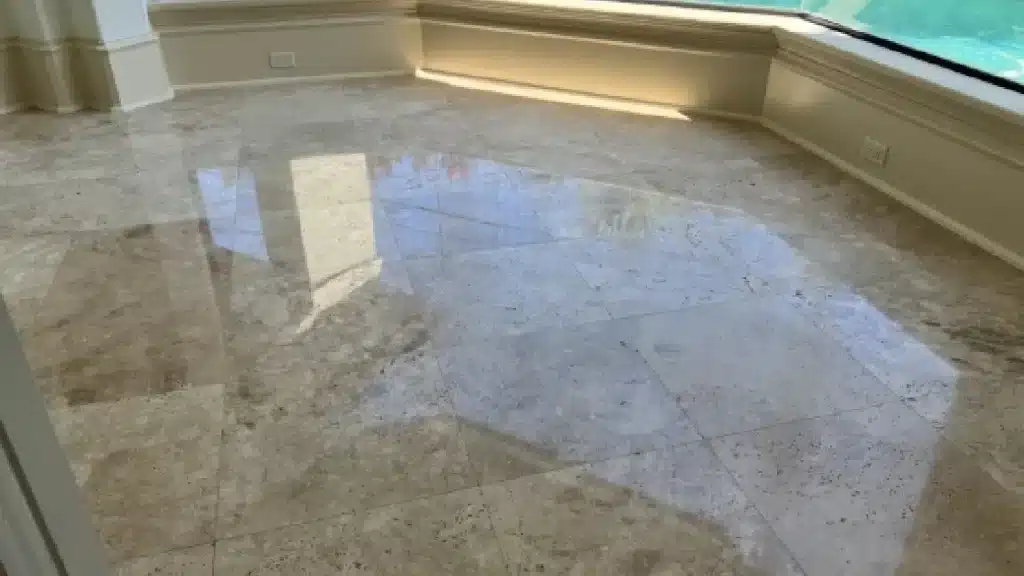
Travertine floor after grinding and polishing with restored reflective finish. 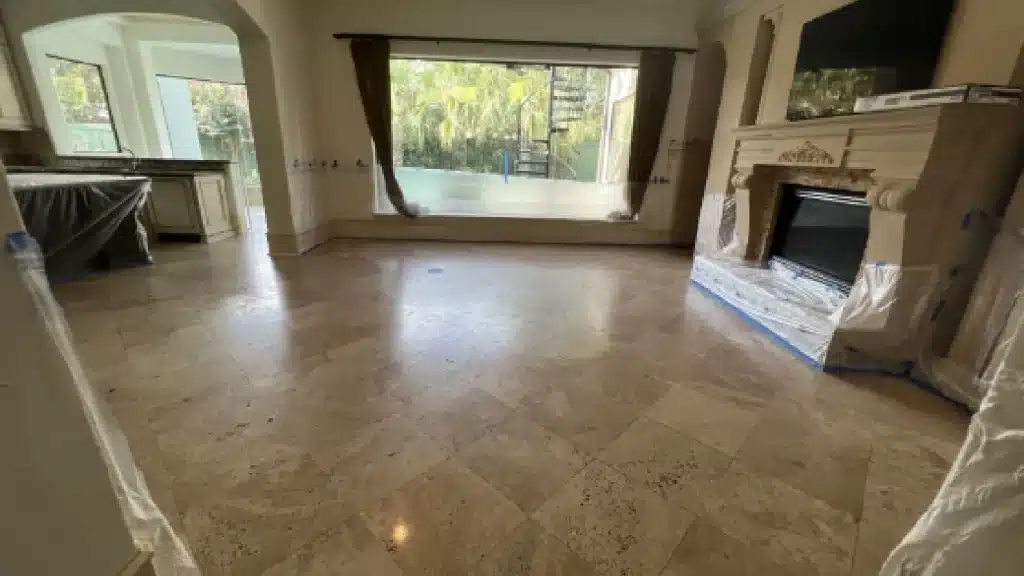
Travertine floor prior to grinding and polishing with visible surface wear. 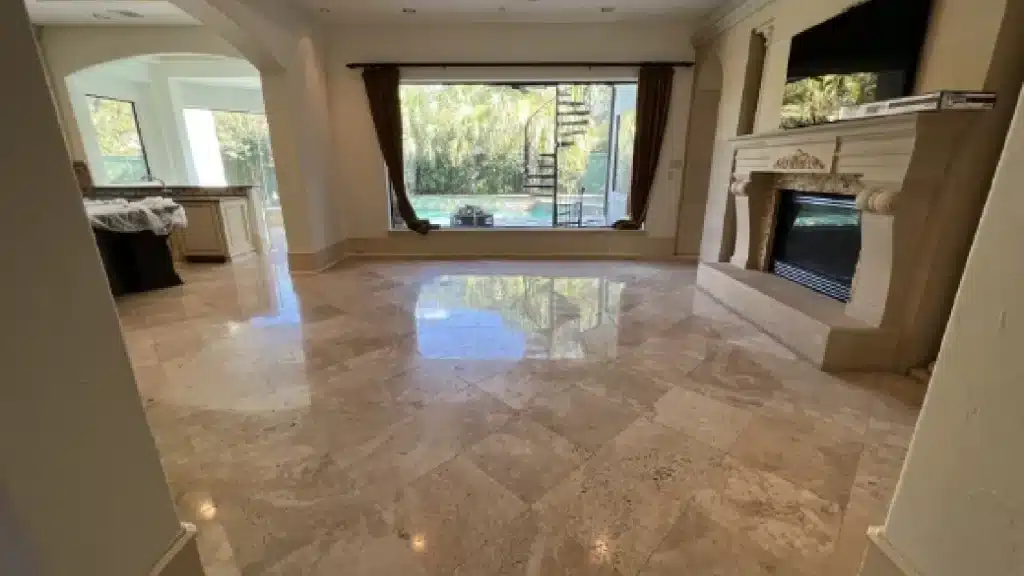
Travertine floor after grinding and polishing with restored reflective sheen.