
Home > Care Guides > Slate
Slate Care Guide
Professional care guidance to help prevent moisture damage, surface flaking, staining, and long-term deterioration of slate surfaces.
Watch This Before Cleaning Slate
Before using any cleaner on slate, it’s important to understand that this natural stone has a layered structure and can absorb moisture if not properly sealed. This short video explains common cleaning mistakes, what to avoid, and how to protect slate surfaces from long-term damage.
What You’ll Learn
Approx. 2 minutes
Daily & Weekly Care
Simple routines that help prevent moisture damage, staining, and surface deterioration—without harming slate’s layered structure.
Daily Routine
Avoid excessive water, acidic cleaners, or abrasive tools that can damage slate’s surface layers.
Weekly Routine
If slate begins to darken easily or show surface deterioration, professional resealing or restoration may be necessary.
Do’s & Don’ts
Following the right care practices helps protect slate’s layered surface and prevent avoidable moisture damage and surface deterioration.
Do’s
Maintain proper sealing and gentle cleaning to protect slate’s natural structure.
Dont’s
Improper moisture control and aggressive cleaning are common causes of slate damage.
Sealing & Protection
Sealing is essential for protecting slate from moisture absorption, staining, and surface deterioration. The type of sealer used—including whether a color enhancer is applied—can significantly affect both appearance and long-term performance.
Do I Need to Seal Slate?
Proper sealing helps protect slate from moisture damage and long-term deterioration.
When & How to Seal
Color-enhancing sealers should be carefully considered before application, as they permanently darken the stone and cannot typically be removed once applied.
If you’re unsure whether to use a natural-look penetrating sealer or a color-enhancing product, a professional test area can help determine the best option before full application.
Common Slate Issues & Solutions
Many slate issues are related to moisture exposure, improper sealing, or aggressive cleaning methods. Addressing concerns early can help prevent long-term surface deterioration.
Common Issues
These issues often stem from moisture intrusion or improper sealing rather than normal wear.
What to Do
Professional care can help prevent further deterioration and extend the life of slate surfaces.
If slate shows persistent flaking, deep staining, or uneven enhancement, professional evaluation can determine the most appropriate corrective solution.
When to Call a Professional
Some slate issues cannot be resolved with routine cleaning or resealing and require professional evaluation.
Signs You Need Professional Help
These issues often indicate moisture intrusion or structural surface deterioration—not simple surface dirt.
How Professionals Can Help
Professional care can help prevent further deterioration and extend the life of slate surfaces.
If slate shows persistent flaking, deep staining, or uneven enhancement, professional evaluation can determine the most appropriate corrective solution.
Professional Slate Restoration Results
Examples of professionally restored slate surfaces after flaking, moisture darkening, staining, efflorescence, and uneven enhancement.
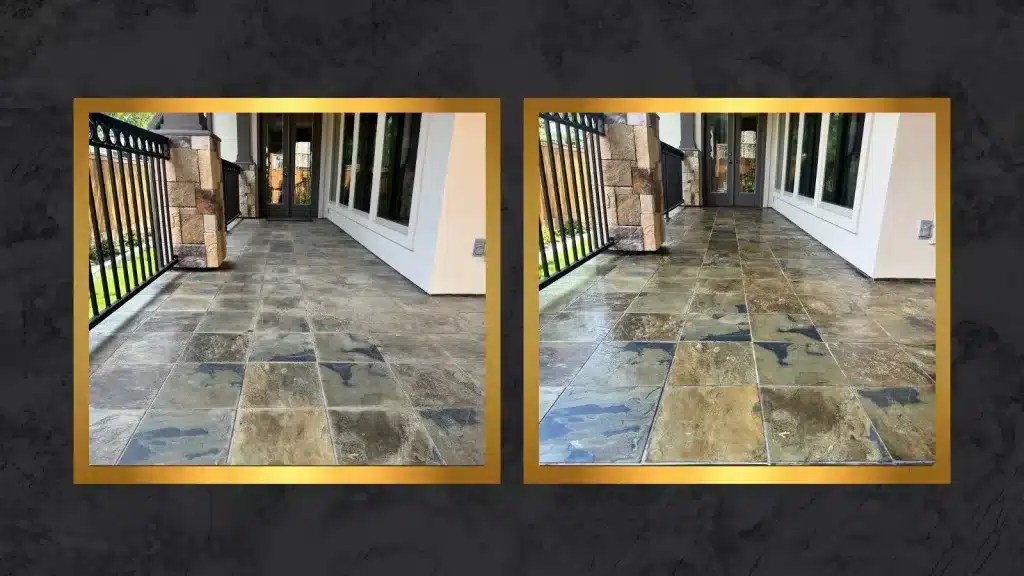 Before and after slate patio restoration by NextGen Surface Care
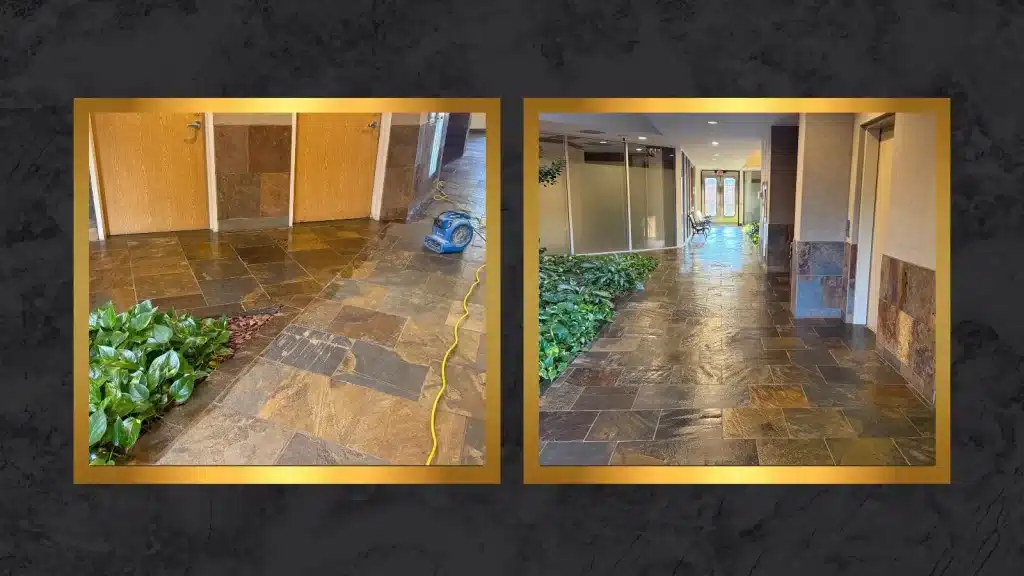 Before and after commercial slate lobby floor cleaning and enhancement with a satin finish
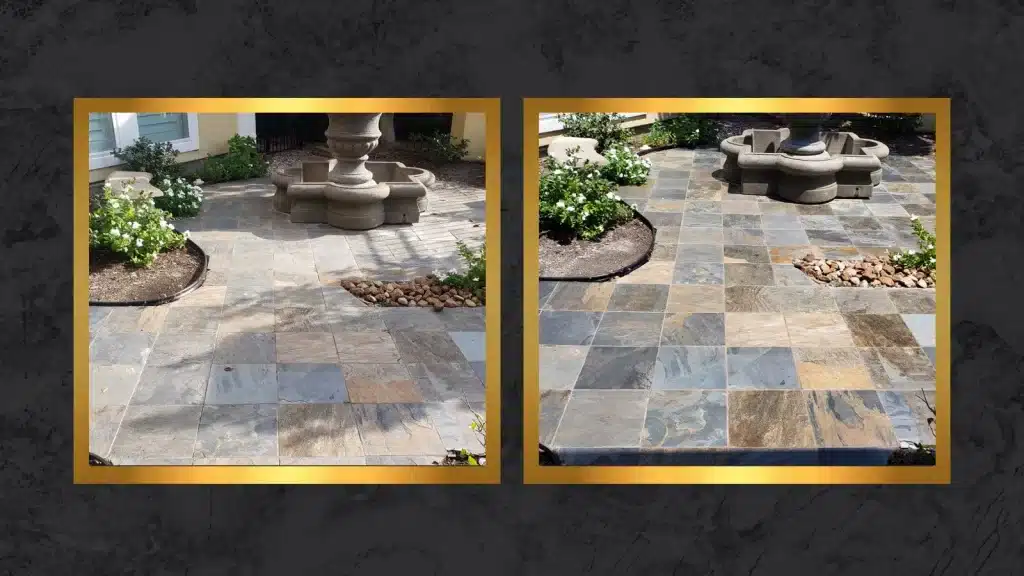 Before and after slate patio floor cleaning and enhanceent with a satin finish
Results vary based on stone condition, past installation , and prior maintenance. Structural flaking or deep moisture-related damage may not be fully reversible.
Prefer a Printable Guide?
Download or browse our interactive care guide for easy reference—keep it handy for quick maintenance reminders.