
Home > Care Guides > Limestone
Limestone Care Guide
Professional care guidance to help prevent staining, surface wear, moisture damage, and long-term deterioration of limestone surfaces.
Watch This Before Cleaning Limestone
Before using any cleaner on limestone, it’s important to understand how this naturally porous stone reacts to moisture, acids, and improper cleaning products. This quick video explains the most common mistakes homeowners make and what to avoid before you begin cleaning.
What You’ll Learn
Approx. 2 minutes
Daily & Weekly Care
Simple routines that help prevent etching, staining, and surface wear—without damaging limestone surfaces.
Daily Routine
Avoid vinegar, bleach, acidic bathroom cleaners, or abrasive pads.
Weekly Routine
If etching or dullness persists, professional restoration—not stronger cleaners—is the solution.
Do’s & Don’ts
Following the right care practices helps protect limestone’s soft, porous surface and prevent avoidable etching and staining.
Do’s
Use only cleaners designed for porous natural stone.
Dont’s
Improper products can cause permanent staining and etching.
Sealing & Protection
Sealing helps protect limestone from staining and moisture absorption—but it does not prevent etching or eliminate routine maintenance.
Do I Need to Seal Limestone?
Sealers do not make limestone stain-proof or maintenance-free.
When & How to Seal
Improper sealing can trap moisture, cause residue buildup, or lead to uneven appearance and filler failure.
If you’re unsure your limestone needs sealing, a professional evaluation can prevent unnecessary products, trapped moisture, or long-term damage.
Common Limestone Issues & Solutions
Many limestone issues are common and preventable when addressed early with proper cleaning methods and surface protection.
Common Issues
These issues often indicate moisture intrusion and can worsen if left unaddressed.
What to Do
Some limestone damage cannot be corrected with cleaning alone and requires professional restoration.
Persistent etching, heavy dullness, or staining often requires professional restoration to correct the surface.
When to Call a Professional
Some limestone issues cannot be resolved with routine cleaning or sealing and require professional restoration.
Signs You Need Professional Help
These issues often indicate moisture intrusion or surface deterioration—not surface dirt.
How Professionals Can Help
Professional care addresses the underlying causes of travertine damage—not just the surface appearance.
Professional limestone restoration is often more effective—and safer—than repeated attempts with stronger cleaners or DIY solutions.
Professional Limestone Restoration Results
Examples of professionally restored limestone surfaces after etching, dullness, and wear.
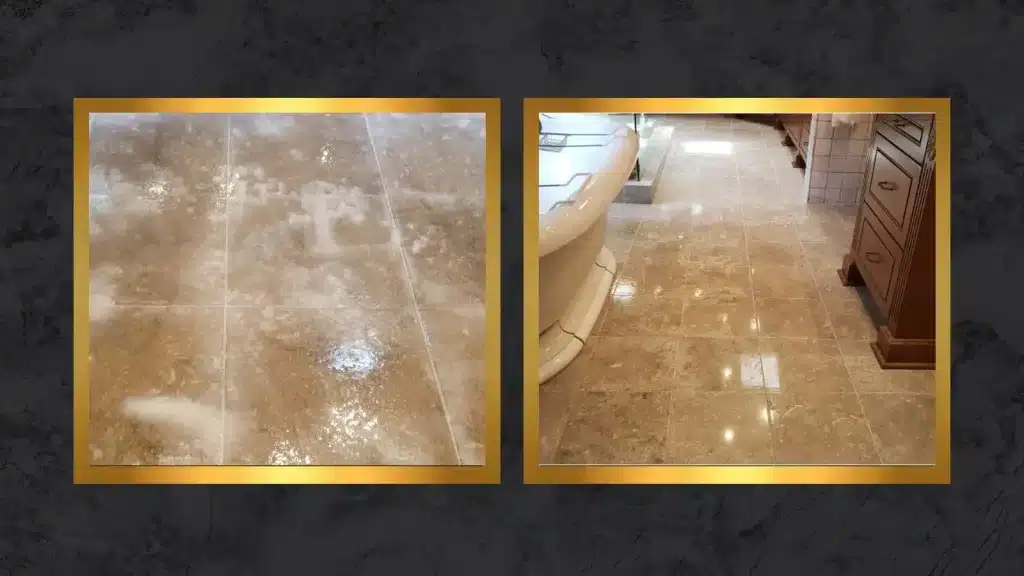 Before and after limestone bathroom floor restoration performed by NextGen Surface Care.
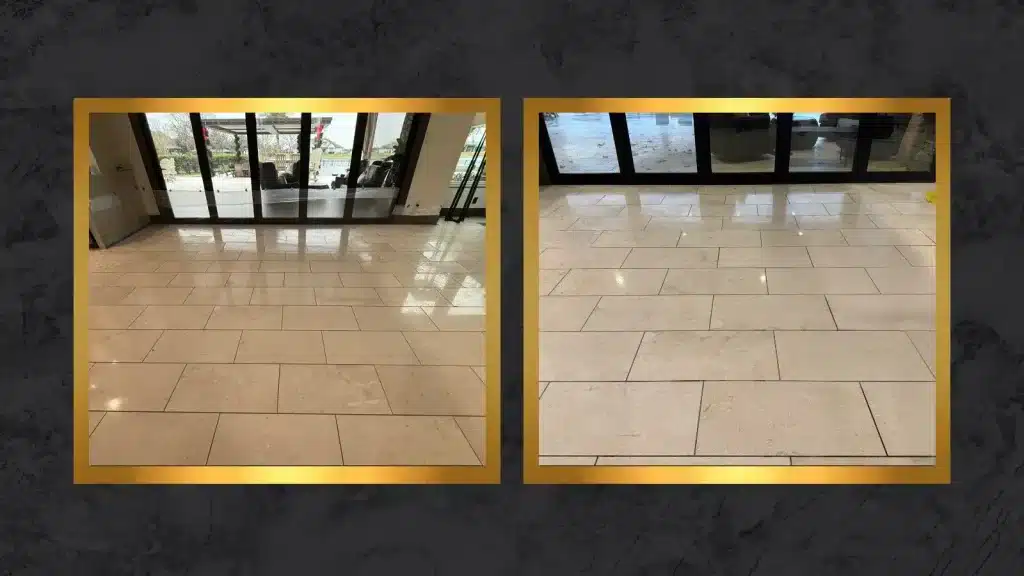 Limestone floor polished to improve uniform shine and overall appearance
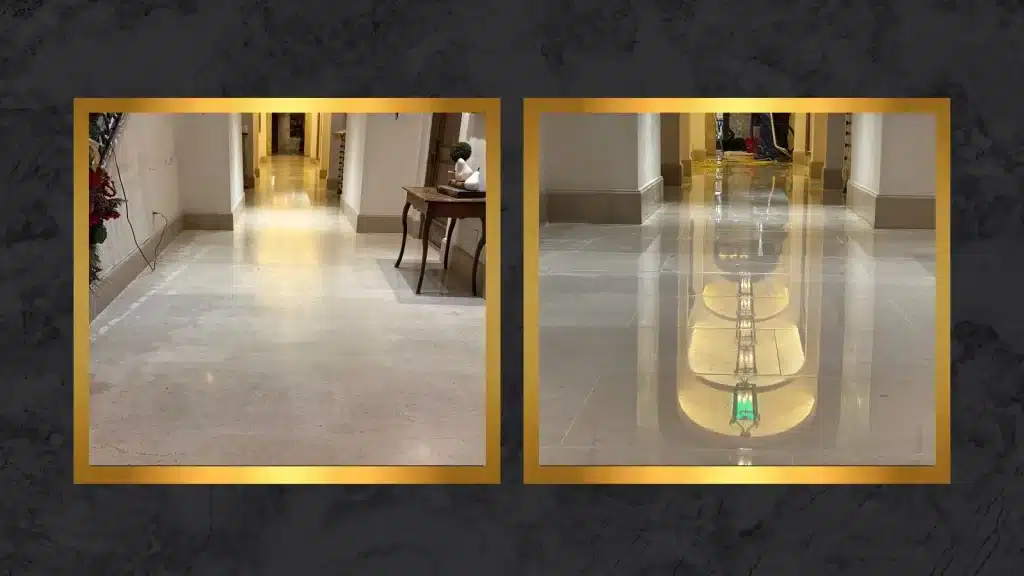 Before and after limestone floor restoration performed by NextGen Surface Care
Results vary based on stone condition, finish, and prior damage. Professional restoration corrects the surface itself—not just the appearance.
Prefer a Printable Guide?
Download or browse our interactive care guide for easy reference—keep it handy for quick maintenance reminders.